
Sculptra in Abu Dhabi
$
Sculptra in Abu Dhabi
Sculptra in Abu Dhabi at House of Skincare is a collagen biostimulator treatment that addresses volume loss and skin laxity by triggering your body’s own collagen production over time. Unlike hyaluronic acid fillers that add immediate volume by hydrating the tissue, Sculptra works through a fundamentally different mechanism: its active ingredient, poly-L-lactic acid (PLLA), stimulates fibroblasts to produce new collagen, with results building gradually over three to six months and lasting up to two years. Dr. Khadija Al Zaabi, DOH-licensed Consultant Dermatologist at House of Skincare on Yas Island, uses Sculptra for patients who want significant, long-lasting structural restoration of the face or body without the monthly maintenance cycles required by HA fillers.
Poly-L-lactic acid is a synthetic, biocompatible, biodegradable polymer that has been used in medicine for decades in dissolvable sutures and bone implants. When injected as a microparticle suspension into the deep dermis and subdermis, the PLLA particles cause a low-grade inflammatory response that recruits fibroblasts to the injection site. These fibroblasts produce new collagen — primarily type I collagen, the same structural collagen that gives young skin its firmness and support. As the PLLA particles are gradually metabolised (over twelve to eighteen months), the new collagen network they induced remains, creating a natural, progressive restoration of facial volume and contour.
Why House of Skincare?
House of Skincare is a specialist dermatology and aesthetic clinic on Yas Island, rated 4.9 stars by over 490 patients on Google. Sculptra requires more technical expertise than standard HA filler. The product must be reconstituted correctly (at least twenty-four hours before use) and injected in a dilute, evenly distributed pattern using a specific technique to avoid nodule formation — a known complication when Sculptra is injected too superficially, at too high a concentration, or without adequate massage post-injection. Dr. Al Zaabi holds a DOH licence as a Consultant Dermatologist and has the clinical experience to use Sculptra correctly, producing the gradual, natural outcome the product is designed to achieve.
What Sculptra Treats
Mid-face volume loss: The mid-face is typically the first area to show significant volume deflation with age, as the malar fat pads descend and thin. Sculptra injected deep in the cheek zone stimulates new collagen in the tissue scaffold, progressively restoring the cheek fullness and the shadow it creates that defines a youthful face. The result is more convincing than surface-level HA filler because it rebuilds the tissue itself.
Temple hollowing: Temporal fat pad atrophy causes the side of the face to hollow, creating a skeletonised appearance and making the brow bone more prominent. Sculptra in the temple restores the smooth curve from the lateral brow to the cheekbone that characterises younger facial contour.
Jawline and chin definition: As the lower face deflates, the jawline softens. Sculptra placed deep along the mandible and in the pre-jowl sulcus rebuilds structural support beneath the skin, sharpening the jawline contour and reducing jowling through tissue support rather than volume addition.
Skin quality on the face and body: Sculptra is increasingly used for diffuse skin quality improvement — particularly for skin laxity on the neck, chest, inner arms, buttocks, and inner thighs, where it stimulates collagen remodelling across a large surface area. The Sculptra “butt lift” is a non-surgical body treatment that adds collagen support and subtle volume to the gluteal tissue.
The Procedure
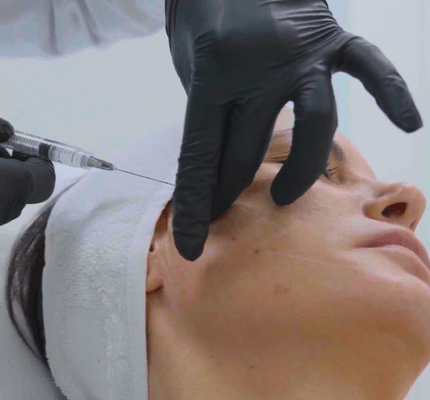
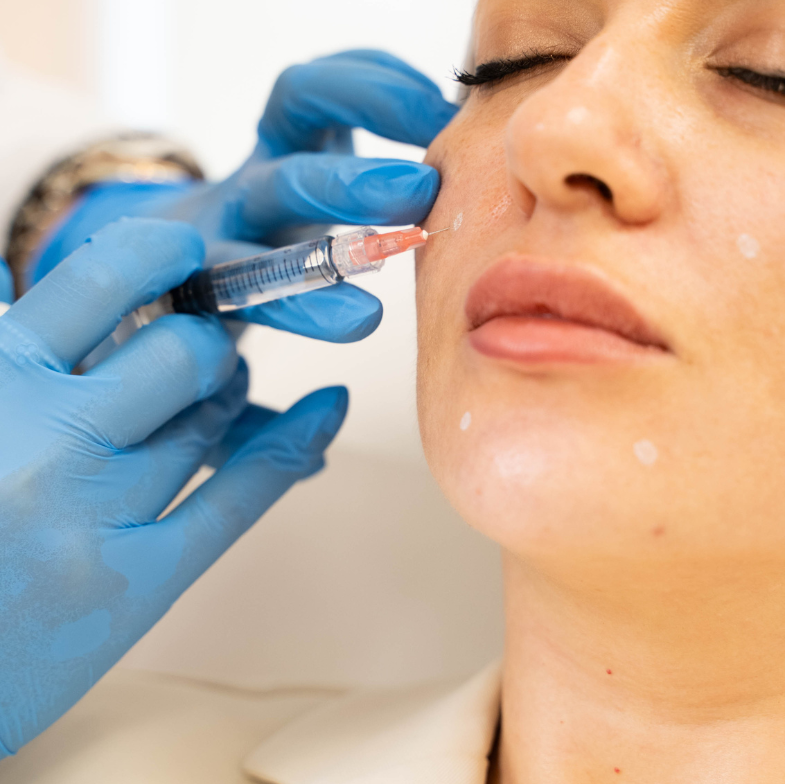
A Sculptra session takes thirty to forty-five minutes. Topical anaesthetic cream is applied before treatment, and a local nerve block may be used for comfort in deeper injection zones. The reconstituted PLLA suspension is injected using a cannula or needle into the deep dermis and subcutaneous tissue in a depot or threading technique across the treatment zone. Immediately after injection, the treated area is massaged firmly for five minutes to distribute the product evenly. This post-injection massage is not optional — it is a required step to prevent product accumulation in one zone that could cause a palpable nodule.
Immediately after treatment, the face will appear fuller and smoother. This is the volume of the fluid in the Sculptra suspension, not the final result. Over the following two to four weeks this fluid is absorbed and the face returns to its pre-treatment appearance. Patients who are not prepared for this temporary improvement followed by temporary return to baseline are often concerned unnecessarily — it is a normal and expected part of the Sculptra cycle. The collagen stimulus then builds progressively over three to six months.
Sessions and Results
Three sessions spaced four to six weeks apart is the standard initial protocol for facial Sculptra. Some patients with significant volume loss require a fourth session. Results are visible from two to three months and continue improving for up to six months. The longevity of Sculptra results — up to twenty-four months for many patients — makes it a cost-effective option despite the higher per-session cost compared to standard HA fillers. Maintenance sessions, typically one vial per year, sustain the collagen stimulation after the initial course.
The 5-5-5 Rule
Patients are instructed to follow the 5-5-5 rule after each Sculptra session: massage the treated area for five minutes, five times per day, for five days after each injection. This daily massage distributes any remaining product and prevents nodule formation. It is a critical aftercare step and must be taken seriously. Dr. Al Zaabi demonstrates the correct massage technique at the end of each session.
Aftercare
Perform the 5-5-5 massage programme religiously for five days after each session. Avoid strenuous exercise, alcohol, and heat (saunas, steam rooms, direct sun) for forty-eight hours. Apply SPF 50 daily. Avoid other injectables in the same zone within four weeks of a Sculptra session. Attend your follow-up sessions at the recommended four to six week intervals — Sculptra results are cumulative and skipping sessions reduces the overall outcome.
Sculptra vs. HA Fillers
HA fillers add immediate volume that is visible the same day and last twelve to eighteen months depending on the product and zone. They are reversible with hyaluronidase and are the first choice for precise structural augmentation (lips, under-eyes, nose, specific deep folds). Sculptra does not produce an immediate visible result — the result builds over months and lasts longer. It is not reversible. It is the better choice for patients who want significant facial volume restoration with natural, gradual progression and multi-year longevity. Many patients use both: HA filler for immediate, specific structural changes and Sculptra for broad collagen-building foundation work.
BENEFITS
- Results last up to 2 years — significantly longer than HA fillers
- Stimulates your own collagen production rather than adding foreign volume
- Treats mid-face, temples, jawline, and body (neck, arms, buttocks)
- Gradual, natural-looking progression over 3 to 6 months
- 3-session protocol spaced 4 to 6 weeks apart
- Performed by a DOH-licensed Consultant Dermatologist