
Dermapen in Abu Dhabi
$
Dermapen in Abu Dhabi
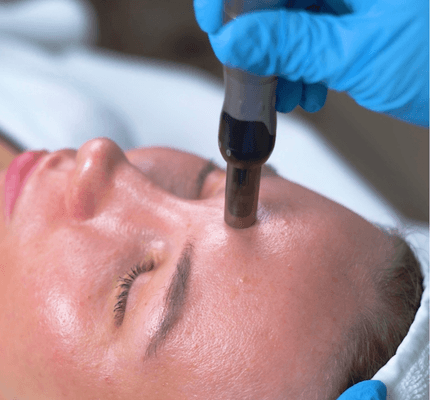
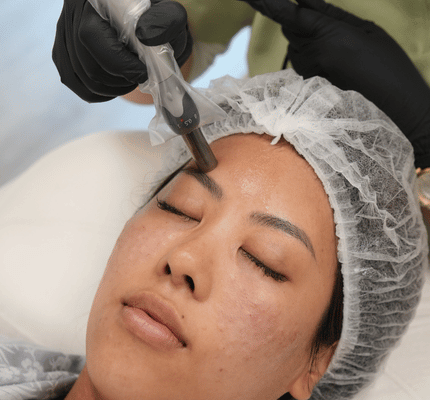
Dermapen in Abu Dhabi at House of Skincare is a medical-grade automated microneedling treatment that uses a vertically oscillating needle cartridge to create thousands of precise microchannels in the skin per second, stimulating the body’s natural collagen and elastin production. The Dermapen device advances the technique of traditional microneedling through adjustable needle depth, consistent needle speed, and a vertical stamping motion that reduces epidermal tearing compared to older roller-based devices. Dr. Khadija Al Zaabi, DOH-licensed Consultant Dermatologist at House of Skincare on Yas Island, uses Dermapen to treat acne scars, fine lines, enlarged pores, uneven skin texture, stretch marks, and hair thinning, with needle parameters tailored precisely to each patient’s skin type and treatment zone.
The Dermapen cartridge contains eleven ultra-fine needles arranged in a circular pattern. The device drives these needles vertically into the skin at a speed of up to 1,800 insertions per second, creating controlled micro-injuries in the epidermis and dermis. Each puncture initiates a wound-healing response: platelets aggregate and release growth factors including PDGF, TGF-beta, and VEGF, which recruit fibroblasts and stimulate them to synthesise new collagen types I and III. The intact epidermis around each microchannel bridges the wound rapidly, meaning the skin surface heals within hours while the deeper collagen remodelling continues for months. The vertical stamping motion of Dermapen creates consistently spaced channels of uniform depth — a key advantage over dermarollers, which drag the needle at an angle and can cause uneven tissue damage.
Why House of Skincare?
House of Skincare is a specialist dermatology and aesthetic clinic on Yas Island, rated 4.9 stars by over 490 patients on Google. Dr. Al Zaabi holds a DOH licence as a Consultant Dermatologist and uses Dermapen as a precision clinical tool with disposable, single-use sterile cartridges for every patient session. The outcome of Dermapen treatment is directly linked to the precision of needle depth selection: too shallow produces inadequate collagen stimulus; too deep causes unnecessary trauma or, in the wrong hands, post-inflammatory hyperpigmentation in darker skin. At House of Skincare, needle depth is set by zone — different depths for the periorbital area, cheeks, and scar zones — producing a treatment that is both effective and safe across all Fitzpatrick skin types.
Conditions Treated
Acne scars: Atrophic acne scars — including rolling, boxcar, and shallow icepick types — are the most common application for Dermapen. The needles mechanically disrupt the fibrous tethering bands beneath rolling scars (a subcision-like effect) and deliver a concentrated collagen stimulus into the scar base. Over three to six sessions, scar depth and texture improve progressively as new collagen fills the depressed areas. Rolling and boxcar scars respond best; very deep icepick scars may require combination with TCA CROSS.
Fine lines and periorbital wrinkles: The thin skin around the eyes is particularly responsive to Dermapen at shallow settings (0.5 to 1.0 mm), where the collagen stimulus thickens the dermis without the risk of bruising or post-treatment hyperpigmentation that deeper settings or lasers can cause in this zone.
Enlarged pores: Dermapen collagen induction thickens the dermis surrounding pore walls, causing them to contract and reducing visible pore diameter. Pore size reduction is consistent across a treatment course and is one of the most reliable outcomes of Dermapen for patients with oily or previously acne-prone skin.
Skin texture and roughness: Whether from sun damage, ageing, previous acne, or dry skin conditions, uneven surface texture responds to Dermapen through a combination of direct exfoliation at the surface (removal of damaged stratum corneum at each needle point) and dermal thickening below, which improves the architectural quality of the skin over time.
Hyperpigmentation and melasma: When combined with topical brightening agents (vitamin C, tranexamic acid, niacinamide) applied immediately after needling through the open microchannels, Dermapen significantly increases the dermal delivery of these actives compared to topical application alone. This combination approach is effective for post-inflammatory hyperpigmentation and superficial melasma.
Stretch marks (striae): Dermapen penetrates into the collagen-deficient zone of stretch marks, stimulating local collagen and elastin production. Texture and colour improvement are achievable with a dedicated stretch mark protocol, though the degree of improvement depends on the age and depth of the striae.
Scalp and hair loss: Scalp Dermapen at 0.5 to 1.5 mm activates hair follicles by improving scalp blood supply, releasing growth factors near the dermal papilla, and increasing the penetration of topical hair growth actives (minoxidil, growth factors). Combined with PRP or mesotherapy, scalp Dermapen produces better outcomes for androgenetic alopecia and telogen effluvium than either treatment alone.
Needle Depth and Customisation
One of Dermapen’s key clinical advantages is the ability to adjust needle depth continuously from 0.25 mm to 2.5 mm. This allows treatment to be customised by zone within a single session:
0.25 to 0.5 mm: superficial epidermis only — used for product infusion and very fine lines around the eyes
0.5 to 1.0 mm: superficial dermis — used for general skin quality improvement, fine lines, and early texture
1.0 to 1.5 mm: mid-dermis — used for acne scars, enlarged pores, and moderate texture irregularity
1.5 to 2.5 mm: deep dermis — used for deep atrophic scars and stretch marks in areas with adequate skin thickness
The Procedure
A Dermapen session takes forty to sixty minutes including numbing time. Topical anaesthetic cream is applied for thirty to forty minutes before treatment. The skin is cleansed and a sterile cartridge is attached to the device. The Dermapen handpiece is moved in systematic overlapping passes across the treatment zone, with needle depth adjusted for each area. A serum — hyaluronic acid, PRP, or a brightening complex depending on the treatment goal — is applied during needling to be driven into the microchannels.
Immediately after treatment the skin appears red and feels warm, similar to moderate sunburn. Pinpoint bleeding may occur at deeper settings and is a normal part of the response. Swelling may develop over the first few hours and peaks at twenty-four hours. Redness settles within twenty-four to forty-eight hours for most patients. There is no significant crusting or open wound.
Sessions and Results
Most patients require three to six sessions spaced four to six weeks apart. Each session builds on the collagen produced by the previous one. Collagen remodelling continues for three to six months after the final session as newly synthesised collagen matures and crosslinks. Visible improvement in skin texture and pore size is often noted from the second session; scar improvement is more gradual and most apparent by three months after the course is complete.
Aftercare
For the first twenty-four hours: cleanse gently with water only, apply a plain fragrance-free moisturiser, and do not apply makeup. Apply SPF 50 the morning after treatment. Avoid retinoids, AHAs, BHAs, and vitamin C for five days post-treatment. Avoid strenuous exercise, saunas, steam rooms, and swimming for forty-eight hours. Do not pick at any dry skin that develops — allow it to shed naturally. Sun protection throughout the treatment course is essential to prevent post-inflammatory hyperpigmentation.
BENEFITS
- Vertical stamping motion creates uniform channels — more precise than dermarollers
- Adjustable depth from 0.25 to 2.5 mm — customised by zone in each session
- Treats acne scars, fine lines, pores, texture, PIH, and hair thinning
- Safe for all Fitzpatrick skin types including darker tones
- Sterile disposable cartridge used for every patient session
- Performed by a DOH-licensed Consultant Dermatologist