
UNDER EYE TREATMENT IN ABU DHABI
Under Eye Treatment in Abu Dhabi
Under eye treatment in Abu Dhabi is one of the most frequently requested consultations at House of Skincare, and also one of the most frequently misunderstood. Dark circles, hollowing under the eyes, puffiness, and fine lines in the periorbital area each have different causes and require different treatments. Using the wrong approach, whether filler when the issue is pigmentation, or topical products when the issue is volume loss, produces no result and sometimes a worse one. Dr. Khadija Al Zaabi, DOH-licensed Consultant Dermatologist at House of Skincare on Yas Island, diagnoses the specific cause of your under-eye concern before recommending any treatment.<\\\\/p>\
\
The periorbital area is the most clinically complex region of the face to treat. The skin is the thinnest on the body. Underlying anatomy includes a vascular-rich fat compartment, the orbicularis oculi muscle, and the infraorbital rim of the bony orbit. Any filler or injectable placed here must be at the precise anatomical depth. The Tyndall effect from superficial HA placement, vascular occlusion from incorrect injection planes, and over-correction are all more visible and more consequential here than anywhere else on the face. Dr. Al Zaabi treats this area with conservative volume, correct technique, and frequent follow-up.<\\\\/p>\
\
Why House of Skincare for Under Eye Treatment?<\\\\/h2>\
Dr. Al Zaabi performs a full periorbital assessment before any under-eye treatment at House of Skincare. She assesses the cause of the concern, not just the symptom. Whether the issue is fat pad hollowing, pigmented skin, vascular dark circles, a combination of these, or a presentation that requires referral rather than clinic treatment, the assessment comes first. The clinic holds a 4.9-star patient rating. Treatment is not delegated. Filler in this area is performed personally by Dr. Al Zaabi using fine cannula technique to minimise vascular risk.<\\\\/p>\
\
Understanding the Causes of Under-Eye Concerns<\\\\/h2>\
The under-eye area is affected by multiple independent processes that can look similar but require different treatment approaches. Correct diagnosis determines whether treatment will work.<\\\\/p>\
Tear trough hollowing (volume loss):<\\\\/strong> The tear trough is the groove running from the inner corner of the eye toward the cheek. It deepens with age as the orbital fat pad descends and the ligaments supporting the mid-face loosen. This creates a shadowed hollow that makes the face look tired regardless of how much sleep the patient gets. Tear trough hollowing is a structural problem, corrected with careful placement of a low-viscosity hyaluronic acid filler in the suborbicularis plane. This is the correct treatment when hollowing is the primary cause of the dark appearance. It is not appropriate for everyone, and patients with significant fat prolapse (puffy lower eyelid fat) may see reduced correction as filler cannot address the fat herniation.<\\\\/p>\
Vascular dark circles:<\\\\/strong> In younger patients and in patients with thinner periorbital skin, dark circles are often caused by the blue-purple colouration of the orbicularis oculi muscle or the blood vessels visible through the overlying thin skin. This is not a pigmentation problem and does not respond to lightening creams or laser. Polynucleotide injections, which thicken and improve the quality of the periorbital skin over time, reduce the transparency that allows this vascular visibility. A small amount of filler to reduce hollow depth also reduces the shadow that amplifies the vascular colour.<\\\\/p>\
Pigmented dark circles:<\\\\/strong> True pigmentation under the eyes presents as brown or blue-brown discolouration that persists regardless of lighting angle. It is more common in patients with darker Fitzpatrick skin tones and is often familial. Topical depigmenting agents containing kojic acid, azelaic acid, or tranexamic acid can improve this over time. Chemical peels and targeted laser treatments can accelerate improvement in selected patients. This type does not respond to filler.<\\\\/p>\
Eyelid skin laxity and crepiness:<\\\\/strong> Thinning of the lower eyelid skin produces a crepey texture that catches light unfavourably and deepens fine lines. Polynucleotide injections at periorbital depth are the most appropriate treatment for this specific concern. They improve skin thickness and elastin density in the eyelid skin without adding volume or altering the structural anatomy of the area.<\\\\/p>\
Under-eye puffiness:<\\\\/strong> Persistent puffiness under the eye is caused by fat pad herniation through the weakened orbital septum, a structural change that is not addressable by non-surgical means. Fluid retention and allergy can cause transient morning puffiness that resolves during the day. If puffiness is structural and persistent, surgical lower blepharoplasty is the definitive treatment. Dr. Al Zaabi discusses this honestly at consultation and refers where appropriate.<\\\\/p>\
\
Tear Trough Filler<\\\\/h2>\
Tear trough filler at House of Skincare uses Juvederm Volbella, a low-viscosity, soft hyaluronic acid formulated specifically for the periorbital area. Its properties are very different from the firmer products used for cheek or jawline volumisation. Volbella integrates smoothly into delicate periorbital tissue without causing the lumpiness or visible puffiness that occurs when a product with incorrect viscosity is placed in this area.<\\\\/p>\
Dr. Al Zaabi uses a cannula technique for tear trough filler rather than a needle where possible. A cannula has a blunt tip that cannot penetrate blood vessel walls, reducing the risk of vascular complications. The product is placed in the suborbicularis oculi fat (SOOF) plane, below the muscle layer, not superficially in the skin. This placement prevents the Tyndall effect, a bluish discolouration that occurs when HA refracts light near the skin surface.<\\\\/p>\
Volume used is conservative. The aim is to reduce shadow depth, not to create fullness. Over-correction in this area creates a puffy, unnatural appearance that is one of the most visible signs of poor filler technique. Dr. Al Zaabi treats to a threshold of shadow reduction, not to maximum filler volume. Results last 9 to 14 months. The tear trough area is one of the shorter-lasting filler locations due to high muscle activity around the eye.<\\\\/p>\
\
Polynucleotides for the Under-Eye Area<\\\\/h2>\
Polynucleotide injections, specifically Rejuran I (formulated for periorbital use), are used at House of Skincare to improve the skin quality of the lower eyelid and periorbital area. The treatment works by stimulating fibroblast activity in the thin eyelid skin, increasing collagen and elastin production, and improving the skin’s intrinsic hydration capacity.<\\\\/p>\
Over a course of 3 to 4 sessions, patients typically see improvement in the crepey texture of lower eyelid skin, a reduction in the visibility of vascular dark circles through increased skin opacity, and general improvement in the brightness and vitality of the periorbital area. It is not an instant result. The improvement builds over 8 to 12 weeks following the initial course.<\\\\/p>\
Polynucleotides and tear trough filler are frequently combined at House of Skincare, as they address different aspects of the under-eye concern simultaneously. Filler reduces structural hollowing and shadow. PDRN improves the skin quality overlying the treated area. The combination produces more complete results than either treatment alone.<\\\\/p>\
\
Topical Treatments for Under-Eye Pigmentation<\\\\/h2>\
For patients whose primary concern is pigmented dark circles, Dr. Al Zaabi prescribes a topical depigmenting programme including tranexamic acid, azelaic acid, or niacinamide formulated for periorbital use. These are applied at night and require consistent use over 8 to 12 weeks before visible improvement occurs. They are a starting point for mild pigmentation and a maintenance adjunct after more intensive treatment for moderate cases.<\\\\/p>\
Chemical peels at very low concentrations can be used on the periorbital area under physician supervision to accelerate epidermal turnover and reduce surface pigmentation. This is not a standard peel session. The concentrations, timing, and application technique are different from body or face peels. Dr. Al Zaabi performs this selectively where appropriate.<\\\\/p>\
\
Before Your Treatment<\\\\/h2>\
Arrive with no eye makeup, no eye cream, no contact lenses.
Stop blood-thinning supplements 5 to 7 days before filler treatment.
Avoid alcohol for 24 hours before.
If you have had previous filler placed by another clinic, inform Dr. Al Zaabi at consultation. Previous filler affects the anatomy and may need to be assessed before new product is placed.<\\\\/p>\
\
After Your Treatment<\\\\/h2>\
After tear trough filler, avoid lying face-down for 24 hours and do not press or massage the treated area.
Mild swelling and bruising are common for 3 to 5 days. Cold compresses reduce swelling.
Avoid strenuous activity and saunas for 24 hours.
Results from filler settle fully over 7 to 10 days as the HA integrates and swelling resolves.
Apply SPF 50 daily after polynucleotide treatment. UV exposure slows skin regeneration in treated tissue.<\\\\/p>\
\
Alternative and Related Treatments<\\\\/h2>\
Profhilo:<\\\\/strong> Profhilo is an ultra-high-concentration hyaluronic acid biostimulator that improves skin quality across the face including the periorbital region. For patients with early under-eye skin laxity who are not ready for filler or PDRN injections, Profhilo provides a broader skin quality improvement that includes the lower eyelid area. The BAP injection protocol avoids the periorbital skin but the tissue remodelling effect extends to this area.<\\\\/p>\
Potenza RF Microneedling:<\\\\/strong> Potenza RF microneedling can be performed at the periorbital margin to improve lower eyelid skin laxity and fine lines. It delivers radiofrequency energy to stimulate collagen and elastin at a depth that topical products cannot reach. This is an alternative or complement to polynucleotide injections for patients whose primary concern is eyelid skin texture rather than hollowing.<\\\\/p>\
Dermal Filler (Full Mid-Face):<\\\\/strong> In patients where the tear trough hollow is driven by volume loss in the mid-face rather than isolated tear trough anatomy, addressing the cheek volume above the hollow is more effective and longer lasting than placing filler in the trough itself. Juvederm Voluma placed in the mid-face lifts the tear trough indirectly by restoring the structural support the lower eyelid rests on. Dr. Al Zaabi assesses the anatomy at consultation and recommends whether isolated tear trough filler or mid-face volumisation is the more appropriate approach.<\\\\/p>[\\\\/vc_column_text] BOOK NOW <\\\\/a>[\\\\/vc_column] Under eye treatment in Abu Dhabi is one of the most frequently requested consultations at House of Skincare, and also one of the most frequently misunderstood. Dark circles, hollowing under the eyes, puffiness, and fine lines in the periorbital area each have different causes and require different treatments. Using the wrong approach, whether filler when the issue is pigmentation, or topical products when the issue is volume loss, produces no result and sometimes a worse one. Dr. Khadija Al Zaabi, DOH-licensed Consultant Dermatologist at House of Skincare on Yas Island, diagnoses the specific cause of your under-eye concern before recommending any treatment.<\\\\/p>\ The periorbital area is the most clinically complex region of the face to treat. The skin is the thinnest on the body. Underlying anatomy includes a vascular-rich fat compartment, the orbicularis oculi muscle, and the infraorbital rim of the bony orbit. Any filler or injectable placed here must be at the precise anatomical depth. The Tyndall effect from superficial HA placement, vascular occlusion from incorrect injection planes, and over-correction are all more visible and more consequential here than anywhere else on the face. Dr. Al Zaabi treats this area with conservative volume, correct technique, and frequent follow-up.<\\\\/p>\ Dr. Al Zaabi performs a full periorbital assessment before any under-eye treatment at House of Skincare. She assesses the cause of the concern, not just the symptom. Whether the issue is fat pad hollowing, pigmented skin, vascular dark circles, a combination of these, or a presentation that requires referral rather than clinic treatment, the assessment comes first. The clinic holds a 4.9-star patient rating. Treatment is not delegated. Filler in this area is performed personally by Dr. Al Zaabi using fine cannula technique to minimise vascular risk.<\\\\/p>\ The under-eye area is affected by multiple independent processes that can look similar but require different treatment approaches. Correct diagnosis determines whether treatment will work.<\\\\/p>\ Tear trough hollowing (volume loss):<\\\\/strong> The tear trough is the groove running from the inner corner of the eye toward the cheek. It deepens with age as the orbital fat pad descends and the ligaments supporting the mid-face loosen. This creates a shadowed hollow that makes the face look tired regardless of how much sleep the patient gets. Tear trough hollowing is a structural problem, corrected with careful placement of a low-viscosity hyaluronic acid filler in the suborbicularis plane. This is the correct treatment when hollowing is the primary cause of the dark appearance. It is not appropriate for everyone, and patients with significant fat prolapse (puffy lower eyelid fat) may see reduced correction as filler cannot address the fat herniation.<\\\\/p>\ Vascular dark circles:<\\\\/strong> In younger patients and in patients with thinner periorbital skin, dark circles are often caused by the blue-purple colouration of the orbicularis oculi muscle or the blood vessels visible through the overlying thin skin. This is not a pigmentation problem and does not respond to lightening creams or laser. Polynucleotide injections, which thicken and improve the quality of the periorbital skin over time, reduce the transparency that allows this vascular visibility. A small amount of filler to reduce hollow depth also reduces the shadow that amplifies the vascular colour.<\\\\/p>\ Pigmented dark circles:<\\\\/strong> True pigmentation under the eyes presents as brown or blue-brown discolouration that persists regardless of lighting angle. It is more common in patients with darker Fitzpatrick skin tones and is often familial. Topical depigmenting agents containing kojic acid, azelaic acid, or tranexamic acid can improve this over time. Chemical peels and targeted laser treatments can accelerate improvement in selected patients. This type does not respond to filler.<\\\\/p>\ Eyelid skin laxity and crepiness:<\\\\/strong> Thinning of the lower eyelid skin produces a crepey texture that catches light unfavourably and deepens fine lines. Polynucleotide injections at periorbital depth are the most appropriate treatment for this specific concern. They improve skin thickness and elastin density in the eyelid skin without adding volume or altering the structural anatomy of the area.<\\\\/p>\ Under-eye puffiness:<\\\\/strong> Persistent puffiness under the eye is caused by fat pad herniation through the weakened orbital septum, a structural change that is not addressable by non-surgical means. Fluid retention and allergy can cause transient morning puffiness that resolves during the day. If puffiness is structural and persistent, surgical lower blepharoplasty is the definitive treatment. Dr. Al Zaabi discusses this honestly at consultation and refers where appropriate.<\\\\/p>\ Tear trough filler at House of Skincare uses Juvederm Volbella, a low-viscosity, soft hyaluronic acid formulated specifically for the periorbital area. Its properties are very different from the firmer products used for cheek or jawline volumisation. Volbella integrates smoothly into delicate periorbital tissue without causing the lumpiness or visible puffiness that occurs when a product with incorrect viscosity is placed in this area.<\\\\/p>\ Dr. Al Zaabi uses a cannula technique for tear trough filler rather than a needle where possible. A cannula has a blunt tip that cannot penetrate blood vessel walls, reducing the risk of vascular complications. The product is placed in the suborbicularis oculi fat (SOOF) plane, below the muscle layer, not superficially in the skin. This placement prevents the Tyndall effect, a bluish discolouration that occurs when HA refracts light near the skin surface.<\\\\/p>\ Volume used is conservative. The aim is to reduce shadow depth, not to create fullness. Over-correction in this area creates a puffy, unnatural appearance that is one of the most visible signs of poor filler technique. Dr. Al Zaabi treats to a threshold of shadow reduction, not to maximum filler volume. Results last 9 to 14 months. The tear trough area is one of the shorter-lasting filler locations due to high muscle activity around the eye.<\\\\/p>\ Polynucleotide injections, specifically Rejuran I (formulated for periorbital use), are used at House of Skincare to improve the skin quality of the lower eyelid and periorbital area. The treatment works by stimulating fibroblast activity in the thin eyelid skin, increasing collagen and elastin production, and improving the skin’s intrinsic hydration capacity.<\\\\/p>\ Over a course of 3 to 4 sessions, patients typically see improvement in the crepey texture of lower eyelid skin, a reduction in the visibility of vascular dark circles through increased skin opacity, and general improvement in the brightness and vitality of the periorbital area. It is not an instant result. The improvement builds over 8 to 12 weeks following the initial course.<\\\\/p>\ Polynucleotides and tear trough filler are frequently combined at House of Skincare, as they address different aspects of the under-eye concern simultaneously. Filler reduces structural hollowing and shadow. PDRN improves the skin quality overlying the treated area. The combination produces more complete results than either treatment alone.<\\\\/p>\ For patients whose primary concern is pigmented dark circles, Dr. Al Zaabi prescribes a topical depigmenting programme including tranexamic acid, azelaic acid, or niacinamide formulated for periorbital use. These are applied at night and require consistent use over 8 to 12 weeks before visible improvement occurs. They are a starting point for mild pigmentation and a maintenance adjunct after more intensive treatment for moderate cases.<\\\\/p>\ Chemical peels at very low concentrations can be used on the periorbital area under physician supervision to accelerate epidermal turnover and reduce surface pigmentation. This is not a standard peel session. The concentrations, timing, and application technique are different from body or face peels. Dr. Al Zaabi performs this selectively where appropriate.<\\\\/p>\ Arrive with no eye makeup, no eye cream, no contact lenses. After tear trough filler, avoid lying face-down for 24 hours and do not press or massage the treated area. Profhilo:<\\\\/strong> Profhilo is an ultra-high-concentration hyaluronic acid biostimulator that improves skin quality across the face including the periorbital region. For patients with early under-eye skin laxity who are not ready for filler or PDRN injections, Profhilo provides a broader skin quality improvement that includes the lower eyelid area. The BAP injection protocol avoids the periorbital skin but the tissue remodelling effect extends to this area.<\\\\/p>\ Potenza RF Microneedling:<\\\\/strong> Potenza RF microneedling can be performed at the periorbital margin to improve lower eyelid skin laxity and fine lines. It delivers radiofrequency energy to stimulate collagen and elastin at a depth that topical products cannot reach. This is an alternative or complement to polynucleotide injections for patients whose primary concern is eyelid skin texture rather than hollowing.<\\\\/p>\ Dermal Filler (Full Mid-Face):<\\\\/strong> In patients where the tear trough hollow is driven by volume loss in the mid-face rather than isolated tear trough anatomy, addressing the cheek volume above the hollow is more effective and longer lasting than placing filler in the trough itself. Juvederm Voluma placed in the mid-face lifts the tear trough indirectly by restoring the structural support the lower eyelid rests on. Dr. Al Zaabi assesses the anatomy at consultation and recommends whether isolated tear trough filler or mid-face volumisation is the more appropriate approach.<\\\\/p>\ [\\\\/vc_column_text] BOOK NOW <\\\\/a> [\\\\/vc_column_text][\\\\/vc_column] [\\\\/vc_column_text] Under eye treatment in Abu Dhabi is one of the most frequently requested consultations at House of Skincare, and also one of the most frequently misunderstood. Dark circles, hollowing under the eyes, puffiness, and fine lines in the periorbital area each have different causes and require different treatments. Using the wrong approach, whether filler when the issue is pigmentation, or topical products when the issue is volume loss, produces no result and sometimes a worse one. Dr. Khadija Al Zaabi, DOH-licensed Consultant Dermatologist at House of Skincare on Yas Island, diagnoses the specific cause of your under-eye concern before recommending any treatment.<\\\\/p> \ The periorbital area is the most clinically complex region of the face to treat. The skin is the thinnest on the body. Underlying anatomy includes a vascular-rich fat compartment, the orbicularis oculi muscle, and the infraorbital rim of the bony orbit. Any filler or injectable placed here must be at the precise anatomical depth. The Tyndall effect from superficial HA placement, vascular occlusion from incorrect injection planes, and over-correction are all more visible and more consequential here than anywhere else on the face. Dr. Al Zaabi treats this area with conservative volume, correct technique, and frequent follow-up.<\\\\/p> \ \<\\\\/p> Dr. Al Zaabi performs a full periorbital assessment before any under-eye treatment at House of Skincare. She assesses the cause of the concern, not just the symptom. Whether the issue is fat pad hollowing, pigmented skin, vascular dark circles, a combination of these, or a presentation that requires referral rather than clinic treatment, the assessment comes first. The clinic holds a 4.9-star patient rating. Treatment is not delegated. Filler in this area is performed personally by Dr. Al Zaabi using fine cannula technique to minimise vascular risk.<\\\\/p> \ \<\\\\/p> The under-eye area is affected by multiple independent processes that can look similar but require different treatment approaches. Correct diagnosis determines whether treatment will work.<\\\\/p> \<\\\\/p> Tear trough hollowing (volume loss):<\\\\/strong> The tear trough is the groove running from the inner corner of the eye toward the cheek. It deepens with age as the orbital fat pad descends and the ligaments supporting the mid-face loosen. This creates a shadowed hollow that makes the face look tired regardless of how much sleep the patient gets. Tear trough hollowing is a structural problem, corrected with careful placement of a low-viscosity hyaluronic acid filler in the suborbicularis plane. This is the correct treatment when hollowing is the primary cause of the dark appearance. It is not appropriate for everyone, and patients with significant fat prolapse (puffy lower eyelid fat) may see reduced correction as filler cannot address the fat herniation.<\\\\/p> \<\\\\/p> Vascular dark circles:<\\\\/strong> In younger patients and in patients with thinner periorbital skin, dark circles are often caused by the blue-purple colouration of the orbicularis oculi muscle or the blood vessels visible through the overlying thin skin. This is not a pigmentation problem and does not respond to lightening creams or laser. Polynucleotide injections, which thicken and improve the quality of the periorbital skin over time, reduce the transparency that allows this vascular visibility. A small amount of filler to reduce hollow depth also reduces the shadow that amplifies the vascular colour.<\\\\/p> \<\\\\/p> Pigmented dark circles:<\\\\/strong> True pigmentation under the eyes presents as brown or blue-brown discolouration that persists regardless of lighting angle. It is more common in patients with darker Fitzpatrick skin tones and is often familial. Topical depigmenting agents containing kojic acid, azelaic acid, or tranexamic acid can improve this over time. Chemical peels and targeted laser treatments can accelerate improvement in selected patients. This type does not respond to filler.<\\\\/p> \<\\\\/p> Eyelid skin laxity and crepiness:<\\\\/strong> Thinning of the lower eyelid skin produces a crepey texture that catches light unfavourably and deepens fine lines. Polynucleotide injections at periorbital depth are the most appropriate treatment for this specific concern. They improve skin thickness and elastin density in the eyelid skin without adding volume or altering the structural anatomy of the area.<\\\\/p> \<\\\\/p> Under-eye puffiness:<\\\\/strong> Persistent puffiness under the eye is caused by fat pad herniation through the weakened orbital septum, a structural change that is not addressable by non-surgical means. Fluid retention and allergy can cause transient morning puffiness that resolves during the day. If puffiness is structural and persistent, surgical lower blepharoplasty is the definitive treatment. Dr. Al Zaabi discusses this honestly at consultation and refers where appropriate.<\\\\/p> \ \<\\\\/p> Tear trough filler at House of Skincare uses Juvederm Volbella, a low-viscosity, soft hyaluronic acid formulated specifically for the periorbital area. Its properties are very different from the firmer products used for cheek or jawline volumisation. Volbella integrates smoothly into delicate periorbital tissue without causing the lumpiness or visible puffiness that occurs when a product with incorrect viscosity is placed in this area.<\\\\/p> \<\\\\/p> Dr. Al Zaabi uses a cannula technique for tear trough filler rather than a needle where possible. A cannula has a blunt tip that cannot penetrate blood vessel walls, reducing the risk of vascular complications. The product is placed in the suborbicularis oculi fat (SOOF) plane, below the muscle layer, not superficially in the skin. This placement prevents the Tyndall effect, a bluish discolouration that occurs when HA refracts light near the skin surface.<\\\\/p> \<\\\\/p> Volume used is conservative. The aim is to reduce shadow depth, not to create fullness. Over-correction in this area creates a puffy, unnatural appearance that is one of the most visible signs of poor filler technique. Dr. Al Zaabi treats to a threshold of shadow reduction, not to maximum filler volume. Results last 9 to 14 months. The tear trough area is one of the shorter-lasting filler locations due to high muscle activity around the eye.<\\\\/p> \ \<\\\\/p> Polynucleotide injections, specifically Rejuran I (formulated for periorbital use), are used at House of Skincare to improve the skin quality of the lower eyelid and periorbital area. The treatment works by stimulating fibroblast activity in the thin eyelid skin, increasing collagen and elastin production, and improving the skin’s intrinsic hydration capacity.<\\\\/p> \<\\\\/p> Over a course of 3 to 4 sessions, patients typically see improvement in the crepey texture of lower eyelid skin, a reduction in the visibility of vascular dark circles through increased skin opacity, and general improvement in the brightness and vitality of the periorbital area. It is not an instant result. The improvement builds over 8 to 12 weeks following the initial course.<\\\\/p> \<\\\\/p> Polynucleotides and tear trough filler are frequently combined at House of Skincare, as they address different aspects of the under-eye concern simultaneously. Filler reduces structural hollowing and shadow. PDRN improves the skin quality overlying the treated area. The combination produces more complete results than either treatment alone.<\\\\/p> \ \<\\\\/p> For patients whose primary concern is pigmented dark circles, Dr. Al Zaabi prescribes a topical depigmenting programme including tranexamic acid, azelaic acid, or niacinamide formulated for periorbital use. These are applied at night and require consistent use over 8 to 12 weeks before visible improvement occurs. They are a starting point for mild pigmentation and a maintenance adjunct after more intensive treatment for moderate cases.<\\\\/p> \<\\\\/p> Chemical peels at very low concentrations can be used on the periorbital area under physician supervision to accelerate epidermal turnover and reduce surface pigmentation. This is not a standard peel session. The concentrations, timing, and application technique are different from body or face peels. Dr. Al Zaabi performs this selectively where appropriate.<\\\\/p> \ \<\\\\/p> Arrive with no eye makeup, no eye cream, no contact lenses. \ \<\\\\/p> After tear trough filler, avoid lying face-down for 24 hours and do not press or massage the treated area. \ \<\\\\/p> Profhilo:<\\\\/strong> Profhilo is an ultra-high-concentration hyaluronic acid biostimulator that improves skin quality across the face including the periorbital region. For patients with early under-eye skin laxity who are not ready for filler or PDRN injections, Profhilo provides a broader skin quality improvement that includes the lower eyelid area. The BAP injection protocol avoids the periorbital skin but the tissue remodelling effect extends to this area.<\\\\/p> \<\\\\/p> Potenza RF Microneedling:<\\\\/strong> Potenza RF microneedling can be performed at the periorbital margin to improve lower eyelid skin laxity and fine lines. It delivers radiofrequency energy to stimulate collagen and elastin at a depth that topical products cannot reach. This is an alternative or complement to polynucleotide injections for patients whose primary concern is eyelid skin texture rather than hollowing.<\\\\/p> \<\\\\/p> Dermal Filler (Full Mid-Face):<\\\\/strong> In patients where the tear trough hollow is driven by volume loss in the mid-face rather than isolated tear trough anatomy, addressing the cheek volume above the hollow is more effective and longer lasting than placing filler in the trough itself. Juvederm Voluma placed in the mid-face lifts the tear trough indirectly by restoring the structural support the lower eyelid rests on. Dr. Al Zaabi assesses the anatomy at consultation and recommends whether isolated tear trough filler or mid-face volumisation is the more appropriate approach.<\\\\/p> [\\\\/vc_column_text] BOOK NOW <\\\\/a> [\\\\/vc_column_text][\\\\/vc_column] [\\\\/vc_column_text] [\\\\/vc_column] \<\\\\/p> Under eye treatment in Abu Dhabi is one of the most frequently requested consultations at House of Skincare, and also one of the most frequently misunderstood. Dark circles, hollowing under the eyes, puffiness, and fine lines in the periorbital area each have different causes and require different treatments. Using the wrong approach, whether filler when the issue is pigmentation, or topical products when the issue is volume loss, produces no result and sometimes a worse one. Dr. Khadija Al Zaabi, DOH-licensed Consultant Dermatologist at House of Skincare on Yas Island, diagnoses the specific cause of your under-eye concern before recommending any treatment.<\\\\/p> \<\\\\/p> The periorbital area is the most clinically complex region of the face to treat. The skin is the thinnest on the body. Underlying anatomy includes a vascular-rich fat compartment, the orbicularis oculi muscle, and the infraorbital rim of the bony orbit. Any filler or injectable placed here must be at the precise anatomical depth. The Tyndall effect from superficial HA placement, vascular occlusion from incorrect injection planes, and over-correction are all more visible and more consequential here than anywhere else on the face. Dr. Al Zaabi treats this area with conservative volume, correct technique, and frequent follow-up.<\\\\/p> \<\\\\/p> \<\\\\/p> Dr. Al Zaabi performs a full periorbital assessment before any under-eye treatment at House of Skincare. She assesses the cause of the concern, not just the symptom. Whether the issue is fat pad hollowing, pigmented skin, vascular dark circles, a combination of these, or a presentation that requires referral rather than clinic treatment, the assessment comes first. The clinic holds a 4.9-star patient rating. Treatment is not delegated. Filler in this area is performed personally by Dr. Al Zaabi using fine cannula technique to minimise vascular risk.<\\\\/p> \<\\\\/p> \<\\\\/p> The under-eye area is affected by multiple independent processes that can look similar but require different treatment approaches. Correct diagnosis determines whether treatment will work.<\\\\/p> \<\\\\/p> Tear trough hollowing (volume loss):<\\\\/strong> The tear trough is the groove running from the inner corner of the eye toward the cheek. It deepens with age as the orbital fat pad descends and the ligaments supporting the mid-face loosen. This creates a shadowed hollow that makes the face look tired regardless of how much sleep the patient gets. Tear trough hollowing is a structural problem, corrected with careful placement of a low-viscosity hyaluronic acid filler in the suborbicularis plane. This is the correct treatment when hollowing is the primary cause of the dark appearance. It is not appropriate for everyone, and patients with significant fat prolapse (puffy lower eyelid fat) may see reduced correction as filler cannot address the fat herniation.<\\\\/p> \<\\\\/p> Vascular dark circles:<\\\\/strong> In younger patients and in patients with thinner periorbital skin, dark circles are often caused by the blue-purple colouration of the orbicularis oculi muscle or the blood vessels visible through the overlying thin skin. This is not a pigmentation problem and does not respond to lightening creams or laser. Polynucleotide injections, which thicken and improve the quality of the periorbital skin over time, reduce the transparency that allows this vascular visibility. A small amount of filler to reduce hollow depth also reduces the shadow that amplifies the vascular colour.<\\\\/p> \<\\\\/p> Pigmented dark circles:<\\\\/strong> True pigmentation under the eyes presents as brown or blue-brown discolouration that persists regardless of lighting angle. It is more common in patients with darker Fitzpatrick skin tones and is often familial. Topical depigmenting agents containing kojic acid, azelaic acid, or tranexamic acid can improve this over time. Chemical peels and targeted laser treatments can accelerate improvement in selected patients. This type does not respond to filler.<\\\\/p> \<\\\\/p> Eyelid skin laxity and crepiness:<\\\\/strong> Thinning of the lower eyelid skin produces a crepey texture that catches light unfavourably and deepens fine lines. Polynucleotide injections at periorbital depth are the most appropriate treatment for this specific concern. They improve skin thickness and elastin density in the eyelid skin without adding volume or altering the structural anatomy of the area.<\\\\/p> \<\\\\/p> Under-eye puffiness:<\\\\/strong> Persistent puffiness under the eye is caused by fat pad herniation through the weakened orbital septum, a structural change that is not addressable by non-surgical means. Fluid retention and allergy can cause transient morning puffiness that resolves during the day. If puffiness is structural and persistent, surgical lower blepharoplasty is the definitive treatment. Dr. Al Zaabi discusses this honestly at consultation and refers where appropriate.<\\\\/p> \<\\\\/p> \<\\\\/p> Tear trough filler at House of Skincare uses Juvederm Volbella, a low-viscosity, soft hyaluronic acid formulated specifically for the periorbital area. Its properties are very different from the firmer products used for cheek or jawline volumisation. Volbella integrates smoothly into delicate periorbital tissue without causing the lumpiness or visible puffiness that occurs when a product with incorrect viscosity is placed in this area.<\\\\/p> \<\\\\/p> Dr. Al Zaabi uses a cannula technique for tear trough filler rather than a needle where possible. A cannula has a blunt tip that cannot penetrate blood vessel walls, reducing the risk of vascular complications. The product is placed in the suborbicularis oculi fat (SOOF) plane, below the muscle layer, not superficially in the skin. This placement prevents the Tyndall effect, a bluish discolouration that occurs when HA refracts light near the skin surface.<\\\\/p> \<\\\\/p> Volume used is conservative. The aim is to reduce shadow depth, not to create fullness. Over-correction in this area creates a puffy, unnatural appearance that is one of the most visible signs of poor filler technique. Dr. Al Zaabi treats to a threshold of shadow reduction, not to maximum filler volume. Results last 9 to 14 months. The tear trough area is one of the shorter-lasting filler locations due to high muscle activity around the eye.<\\\\/p> \<\\\\/p> \<\\\\/p> Polynucleotide injections, specifically Rejuran I (formulated for periorbital use), are used at House of Skincare to improve the skin quality of the lower eyelid and periorbital area. The treatment works by stimulating fibroblast activity in the thin eyelid skin, increasing collagen and elastin production, and improving the skin’s intrinsic hydration capacity.<\\\\/p> \<\\\\/p> Over a course of 3 to 4 sessions, patients typically see improvement in the crepey texture of lower eyelid skin, a reduction in the visibility of vascular dark circles through increased skin opacity, and general improvement in the brightness and vitality of the periorbital area. It is not an instant result. The improvement builds over 8 to 12 weeks following the initial course.<\\\\/p> \<\\\\/p> Polynucleotides and tear trough filler are frequently combined at House of Skincare, as they address different aspects of the under-eye concern simultaneously. Filler reduces structural hollowing and shadow. PDRN improves the skin quality overlying the treated area. The combination produces more complete results than either treatment alone.<\\\\/p> \<\\\\/p> \<\\\\/p> For patients whose primary concern is pigmented dark circles, Dr. Al Zaabi prescribes a topical depigmenting programme including tranexamic acid, azelaic acid, or niacinamide formulated for periorbital use. These are applied at night and require consistent use over 8 to 12 weeks before visible improvement occurs. They are a starting point for mild pigmentation and a maintenance adjunct after more intensive treatment for moderate cases.<\\\\/p> \<\\\\/p> Chemical peels at very low concentrations can be used on the periorbital area under physician supervision to accelerate epidermal turnover and reduce surface pigmentation. This is not a standard peel session. The concentrations, timing, and application technique are different from body or face peels. Dr. Al Zaabi performs this selectively where appropriate.<\\\\/p> \<\\\\/p> \<\\\\/p> Arrive with no eye makeup, no eye cream, no contact lenses. \<\\\\/p> \<\\\\/p> After tear trough filler, avoid lying face-down for 24 hours and do not press or massage the treated area. \<\\\\/p> \<\\\\/p> Profhilo:<\\\\/strong> Profhilo is an ultra-high-concentration hyaluronic acid biostimulator that improves skin quality across the face including the periorbital region. For patients with early under-eye skin laxity who are not ready for filler or PDRN injections, Profhilo provides a broader skin quality improvement that includes the lower eyelid area. The BAP injection protocol avoids the periorbital skin but the tissue remodelling effect extends to this area.<\\\\/p> \<\\\\/p> Potenza RF Microneedling:<\\\\/strong> Potenza RF microneedling can be performed at the periorbital margin to improve lower eyelid skin laxity and fine lines. It delivers radiofrequency energy to stimulate collagen and elastin at a depth that topical products cannot reach. This is an alternative or complement to polynucleotide injections for patients whose primary concern is eyelid skin texture rather than hollowing.<\\\\/p> \<\\\\/p> Dermal Filler (Full Mid-Face):<\\\\/strong> In patients where the tear trough hollow is driven by volume loss in the mid-face rather than isolated tear trough anatomy, addressing the cheek volume above the hollow is more effective and longer lasting than placing filler in the trough itself. Juvederm Voluma placed in the mid-face lifts the tear trough indirectly by restoring the structural support the lower eyelid rests on. Dr. Al Zaabi assesses the anatomy at consultation and recommends whether isolated tear trough filler or mid-face volumisation is the more appropriate approach.<\\\\/p> \<\\\\/p> [\\\\/vc_column_text] BOOK NOW <\\\\/a><\\\\/p> [\\\\/vc_column] [\\\\/vc_column][\\\\/vc_row] [\\\\/vc_column] \<\\\\/p> \<\\\\/p> \<\\\\/p> \<\\\\/p> \<\\\\/p> \<\\\\/p> \ \<\\\\/p> [\\\\/vc_column_text][\\\\/vc_column] [\\\\/vc_column][\\\\/vc_row] \<\\\\/p> \<\\\\/p> \ \ \<\\\\/p> \<\\\\/p> \ \ \<\\\\/p> \<\\\\/p> \ \ \<\\\\/p> \<\\\\/p> \ \ \<\\\\/p> \<\\\\/p> \ \ \ \<\\\\/p> [\\\\/vc_column_text]<\\\\/p> [\\\\/vc_column][\\\\/vc_row]<\\\\/p> \ Under eye treatment in Abu Dhabi is one of the most frequently requested consultations at House of Skincare, and also one of the most frequently misunderstood. Dark circles, hollowing under the eyes, puffiness, and fine lines in the periorbital area each have different causes and require different treatments. Using the wrong approach, whether filler when the issue is pigmentation, or topical products when the issue is volume loss, produces no result and sometimes a worse one. Dr. Khadija Al Zaabi, DOH-licensed Consultant Dermatologist at House of Skincare on Yas Island, diagnoses the specific cause of your under-eye concern before recommending any treatment.<\\\\/p>\ The periorbital area is the most clinically complex region of the face to treat. The skin is the thinnest on the body. Underlying anatomy includes a vascular-rich fat compartment, the orbicularis oculi muscle, and the infraorbital rim of the bony orbit. Any filler or injectable placed here must be at the precise anatomical depth. The Tyndall effect from superficial HA placement, vascular occlusion from incorrect injection planes, and over-correction are all more visible and more consequential here than anywhere else on the face. Dr. Al Zaabi treats this area with conservative volume, correct technique, and frequent follow-up.<\\\\/p>\ Dr. Al Zaabi performs a full periorbital assessment before any under-eye treatment at House of Skincare. She assesses the cause of the concern, not just the symptom. Whether the issue is fat pad hollowing, pigmented skin, vascular dark circles, a combination of these, or a presentation that requires referral rather than clinic treatment, the assessment comes first. The clinic holds a 4.9-star patient rating. Treatment is not delegated. Filler in this area is performed personally by Dr. Al Zaabi using fine cannula technique to minimise vascular risk.<\\\\/p>\ The under-eye area is affected by multiple independent processes that can look similar but require different treatment approaches. Correct diagnosis determines whether treatment will work.<\\\\/p>\<\\\/p> Tear trough hollowing (volume loss):<\\\\/strong> The tear trough is the groove running from the inner corner of the eye toward the cheek. It deepens with age as the orbital fat pad descends and the ligaments supporting the mid-face loosen. This creates a shadowed hollow that makes the face look tired regardless of how much sleep the patient gets. Tear trough hollowing is a structural problem, corrected with careful placement of a low-viscosity hyaluronic acid filler in the suborbicularis plane. This is the correct treatment when hollowing is the primary cause of the dark appearance. It is not appropriate for everyone, and patients with significant fat prolapse (puffy lower eyelid fat) may see reduced correction as filler cannot address the fat herniation.<\\\\/p>\<\\\/p> Vascular dark circles:<\\\\/strong> In younger patients and in patients with thinner periorbital skin, dark circles are often caused by the blue-purple colouration of the orbicularis oculi muscle or the blood vessels visible through the overlying thin skin. This is not a pigmentation problem and does not respond to lightening creams or laser. Polynucleotide injections, which thicken and improve the quality of the periorbital skin over time, reduce the transparency that allows this vascular visibility. A small amount of filler to reduce hollow depth also reduces the shadow that amplifies the vascular colour.<\\\\/p>\<\\\/p> Pigmented dark circles:<\\\\/strong> True pigmentation under the eyes presents as brown or blue-brown discolouration that persists regardless of lighting angle. It is more common in patients with darker Fitzpatrick skin tones and is often familial. Topical depigmenting agents containing kojic acid, azelaic acid, or tranexamic acid can improve this over time. Chemical peels and targeted laser treatments can accelerate improvement in selected patients. This type does not respond to filler.<\\\\/p>\<\\\/p> Eyelid skin laxity and crepiness:<\\\\/strong> Thinning of the lower eyelid skin produces a crepey texture that catches light unfavourably and deepens fine lines. Polynucleotide injections at periorbital depth are the most appropriate treatment for this specific concern. They improve skin thickness and elastin density in the eyelid skin without adding volume or altering the structural anatomy of the area.<\\\\/p>\<\\\/p> Under-eye puffiness:<\\\\/strong> Persistent puffiness under the eye is caused by fat pad herniation through the weakened orbital septum, a structural change that is not addressable by non-surgical means. Fluid retention and allergy can cause transient morning puffiness that resolves during the day. If puffiness is structural and persistent, surgical lower blepharoplasty is the definitive treatment. Dr. Al Zaabi discusses this honestly at consultation and refers where appropriate.<\\\\/p>\ Tear trough filler at House of Skincare uses Juvederm Volbella, a low-viscosity, soft hyaluronic acid formulated specifically for the periorbital area. Its properties are very different from the firmer products used for cheek or jawline volumisation. Volbella integrates smoothly into delicate periorbital tissue without causing the lumpiness or visible puffiness that occurs when a product with incorrect viscosity is placed in this area.<\\\\/p>\<\\\/p> Dr. Al Zaabi uses a cannula technique for tear trough filler rather than a needle where possible. A cannula has a blunt tip that cannot penetrate blood vessel walls, reducing the risk of vascular complications. The product is placed in the suborbicularis oculi fat (SOOF) plane, below the muscle layer, not superficially in the skin. This placement prevents the Tyndall effect, a bluish discolouration that occurs when HA refracts light near the skin surface.<\\\\/p>\<\\\/p> Volume used is conservative. The aim is to reduce shadow depth, not to create fullness. Over-correction in this area creates a puffy, unnatural appearance that is one of the most visible signs of poor filler technique. Dr. Al Zaabi treats to a threshold of shadow reduction, not to maximum filler volume. Results last 9 to 14 months. The tear trough area is one of the shorter-lasting filler locations due to high muscle activity around the eye.<\\\\/p>\ Polynucleotide injections, specifically Rejuran I (formulated for periorbital use), are used at House of Skincare to improve the skin quality of the lower eyelid and periorbital area. The treatment works by stimulating fibroblast activity in the thin eyelid skin, increasing collagen and elastin production, and improving the skin’s intrinsic hydration capacity.<\\\\/p>\<\\\/p> Over a course of 3 to 4 sessions, patients typically see improvement in the crepey texture of lower eyelid skin, a reduction in the visibility of vascular dark circles through increased skin opacity, and general improvement in the brightness and vitality of the periorbital area. It is not an instant result. The improvement builds over 8 to 12 weeks following the initial course.<\\\\/p>\<\\\/p> Polynucleotides and tear trough filler are frequently combined at House of Skincare, as they address different aspects of the under-eye concern simultaneously. Filler reduces structural hollowing and shadow. PDRN improves the skin quality overlying the treated area. The combination produces more complete results than either treatment alone.<\\\\/p>\ For patients whose primary concern is pigmented dark circles, Dr. Al Zaabi prescribes a topical depigmenting programme including tranexamic acid, azelaic acid, or niacinamide formulated for periorbital use. These are applied at night and require consistent use over 8 to 12 weeks before visible improvement occurs. They are a starting point for mild pigmentation and a maintenance adjunct after more intensive treatment for moderate cases.<\\\\/p>\<\\\/p> Chemical peels at very low concentrations can be used on the periorbital area under physician supervision to accelerate epidermal turnover and reduce surface pigmentation. This is not a standard peel session. The concentrations, timing, and application technique are different from body or face peels. Dr. Al Zaabi performs this selectively where appropriate.<\\\\/p>\ Arrive with no eye makeup, no eye cream, no contact lenses. After tear trough filler, avoid lying face-down for 24 hours and do not press or massage the treated area. Profhilo:<\\\\/strong> Profhilo is an ultra-high-concentration hyaluronic acid biostimulator that improves skin quality across the face including the periorbital region. For patients with early under-eye skin laxity who are not ready for filler or PDRN injections, Profhilo provides a broader skin quality improvement that includes the lower eyelid area. The BAP injection protocol avoids the periorbital skin but the tissue remodelling effect extends to this area.<\\\\/p>\<\\\/p> Potenza RF Microneedling:<\\\\/strong> Potenza RF microneedling can be performed at the periorbital margin to improve lower eyelid skin laxity and fine lines. It delivers radiofrequency energy to stimulate collagen and elastin at a depth that topical products cannot reach. This is an alternative or complement to polynucleotide injections for patients whose primary concern is eyelid skin texture rather than hollowing.<\\\\/p>\<\\\/p> Dermal Filler (Full Mid-Face):<\\\\/strong> In patients where the tear trough hollow is driven by volume loss in the mid-face rather than isolated tear trough anatomy, addressing the cheek volume above the hollow is more effective and longer lasting than placing filler in the trough itself. Juvederm Voluma placed in the mid-face lifts the tear trough indirectly by restoring the structural support the lower eyelid rests on. Dr. Al Zaabi assesses the anatomy at consultation and recommends whether isolated tear trough filler or mid-face volumisation is the more appropriate approach.<\\\\/p>[\\\\/vc_column_text] BOOK NOW <\\\\/a> Under eye treatment in Abu Dhabi is one of the most frequently requested consultations at House of Skincare, and also one of the most frequently misunderstood. Dark circles, hollowing under the eyes, puffiness, and fine lines in the periorbital area each have different causes and require different treatments. Using the wrong approach, whether filler when the issue is pigmentation, or topical products when the issue is volume loss, produces no result and sometimes a worse one. Dr. Khadija Al Zaabi, DOH-licensed Consultant Dermatologist at House of Skincare on Yas Island, diagnoses the specific cause of your under-eye concern before recommending any treatment.<\\\\/p>\<\\\/p> The periorbital area is the most clinically complex region of the face to treat. The skin is the thinnest on the body. Underlying anatomy includes a vascular-rich fat compartment, the orbicularis oculi muscle, and the infraorbital rim of the bony orbit. Any filler or injectable placed here must be at the precise anatomical depth. The Tyndall effect from superficial HA placement, vascular occlusion from incorrect injection planes, and over-correction are all more visible and more consequential here than anywhere else on the face. Dr. Al Zaabi treats this area with conservative volume, correct technique, and frequent follow-up.<\\\\/p>\<\\\/p> Dr. Al Zaabi performs a full periorbital assessment before any under-eye treatment at House of Skincare. She assesses the cause of the concern, not just the symptom. Whether the issue is fat pad hollowing, pigmented skin, vascular dark circles, a combination of these, or a presentation that requires referral rather than clinic treatment, the assessment comes first. The clinic holds a 4.9-star patient rating. Treatment is not delegated. Filler in this area is performed personally by Dr. Al Zaabi using fine cannula technique to minimise vascular risk.<\\\\/p>\<\\\/p> The under-eye area is affected by multiple independent processes that can look similar but require different treatment approaches. Correct diagnosis determines whether treatment will work.<\\\\/p>\<\\\/p> Tear trough hollowing (volume loss):<\\\\/strong> The tear trough is the groove running from the inner corner of the eye toward the cheek. It deepens with age as the orbital fat pad descends and the ligaments supporting the mid-face loosen. This creates a shadowed hollow that makes the face look tired regardless of how much sleep the patient gets. Tear trough hollowing is a structural problem, corrected with careful placement of a low-viscosity hyaluronic acid filler in the suborbicularis plane. This is the correct treatment when hollowing is the primary cause of the dark appearance. It is not appropriate for everyone, and patients with significant fat prolapse (puffy lower eyelid fat) may see reduced correction as filler cannot address the fat herniation.<\\\\/p>\<\\\/p> Vascular dark circles:<\\\\/strong> In younger patients and in patients with thinner periorbital skin, dark circles are often caused by the blue-purple colouration of the orbicularis oculi muscle or the blood vessels visible through the overlying thin skin. This is not a pigmentation problem and does not respond to lightening creams or laser. Polynucleotide injections, which thicken and improve the quality of the periorbital skin over time, reduce the transparency that allows this vascular visibility. A small amount of filler to reduce hollow depth also reduces the shadow that amplifies the vascular colour.<\\\\/p>\<\\\/p> Pigmented dark circles:<\\\\/strong> True pigmentation under the eyes presents as brown or blue-brown discolouration that persists regardless of lighting angle. It is more common in patients with darker Fitzpatrick skin tones and is often familial. Topical depigmenting agents containing kojic acid, azelaic acid, or tranexamic acid can improve this over time. Chemical peels and targeted laser treatments can accelerate improvement in selected patients. This type does not respond to filler.<\\\\/p>\<\\\/p> Eyelid skin laxity and crepiness:<\\\\/strong> Thinning of the lower eyelid skin produces a crepey texture that catches light unfavourably and deepens fine lines. Polynucleotide injections at periorbital depth are the most appropriate treatment for this specific concern. They improve skin thickness and elastin density in the eyelid skin without adding volume or altering the structural anatomy of the area.<\\\\/p>\<\\\/p> Under-eye puffiness:<\\\\/strong> Persistent puffiness under the eye is caused by fat pad herniation through the weakened orbital septum, a structural change that is not addressable by non-surgical means. Fluid retention and allergy can cause transient morning puffiness that resolves during the day. If puffiness is structural and persistent, surgical lower blepharoplasty is the definitive treatment. Dr. Al Zaabi discusses this honestly at consultation and refers where appropriate.<\\\\/p>\<\\\/p> Tear trough filler at House of Skincare uses Juvederm Volbella, a low-viscosity, soft hyaluronic acid formulated specifically for the periorbital area. Its properties are very different from the firmer products used for cheek or jawline volumisation. Volbella integrates smoothly into delicate periorbital tissue without causing the lumpiness or visible puffiness that occurs when a product with incorrect viscosity is placed in this area.<\\\\/p>\<\\\/p> Dr. Al Zaabi uses a cannula technique for tear trough filler rather than a needle where possible. A cannula has a blunt tip that cannot penetrate blood vessel walls, reducing the risk of vascular complications. The product is placed in the suborbicularis oculi fat (SOOF) plane, below the muscle layer, not superficially in the skin. This placement prevents the Tyndall effect, a bluish discolouration that occurs when HA refracts light near the skin surface.<\\\\/p>\<\\\/p> Volume used is conservative. The aim is to reduce shadow depth, not to create fullness. Over-correction in this area creates a puffy, unnatural appearance that is one of the most visible signs of poor filler technique. Dr. Al Zaabi treats to a threshold of shadow reduction, not to maximum filler volume. Results last 9 to 14 months. The tear trough area is one of the shorter-lasting filler locations due to high muscle activity around the eye.<\\\\/p>\<\\\/p> Polynucleotide injections, specifically Rejuran I (formulated for periorbital use), are used at House of Skincare to improve the skin quality of the lower eyelid and periorbital area. The treatment works by stimulating fibroblast activity in the thin eyelid skin, increasing collagen and elastin production, and improving the skin’s intrinsic hydration capacity.<\\\\/p>\<\\\/p> Over a course of 3 to 4 sessions, patients typically see improvement in the crepey texture of lower eyelid skin, a reduction in the visibility of vascular dark circles through increased skin opacity, and general improvement in the brightness and vitality of the periorbital area. It is not an instant result. The improvement builds over 8 to 12 weeks following the initial course.<\\\\/p>\<\\\/p> Polynucleotides and tear trough filler are frequently combined at House of Skincare, as they address different aspects of the under-eye concern simultaneously. Filler reduces structural hollowing and shadow. PDRN improves the skin quality overlying the treated area. The combination produces more complete results than either treatment alone.<\\\\/p>\<\\\/p> For patients whose primary concern is pigmented dark circles, Dr. Al Zaabi prescribes a topical depigmenting programme including tranexamic acid, azelaic acid, or niacinamide formulated for periorbital use. These are applied at night and require consistent use over 8 to 12 weeks before visible improvement occurs. They are a starting point for mild pigmentation and a maintenance adjunct after more intensive treatment for moderate cases.<\\\\/p>\<\\\/p> Chemical peels at very low concentrations can be used on the periorbital area under physician supervision to accelerate epidermal turnover and reduce surface pigmentation. This is not a standard peel session. The concentrations, timing, and application technique are different from body or face peels. Dr. Al Zaabi performs this selectively where appropriate.<\\\\/p>\<\\\/p> Arrive with no eye makeup, no eye cream, no contact lenses. After tear trough filler, avoid lying face-down for 24 hours and do not press or massage the treated area. Profhilo:<\\\\/strong> Profhilo is an ultra-high-concentration hyaluronic acid biostimulator that improves skin quality across the face including the periorbital region. For patients with early under-eye skin laxity who are not ready for filler or PDRN injections, Profhilo provides a broader skin quality improvement that includes the lower eyelid area. The BAP injection protocol avoids the periorbital skin but the tissue remodelling effect extends to this area.<\\\\/p>\<\\\/p> Potenza RF Microneedling:<\\\\/strong> Potenza RF microneedling can be performed at the periorbital margin to improve lower eyelid skin laxity and fine lines. It delivers radiofrequency energy to stimulate collagen and elastin at a depth that topical products cannot reach. This is an alternative or complement to polynucleotide injections for patients whose primary concern is eyelid skin texture rather than hollowing.<\\\\/p>\<\\\/p> Dermal Filler (Full Mid-Face):<\\\\/strong> In patients where the tear trough hollow is driven by volume loss in the mid-face rather than isolated tear trough anatomy, addressing the cheek volume above the hollow is more effective and longer lasting than placing filler in the trough itself. Juvederm Voluma placed in the mid-face lifts the tear trough indirectly by restoring the structural support the lower eyelid rests on. Dr. Al Zaabi assesses the anatomy at consultation and recommends whether isolated tear trough filler or mid-face volumisation is the more appropriate approach.<\\\\/p>\<\\\/p> [\\\\/vc_column_text] BOOK NOW <\\\\/a><\\\/p> [\\\\/vc_column_text][\\\\/vc_column] [\\\\/vc_column_text]<\\\/p> Under eye treatment in Abu Dhabi is one of the most frequently requested consultations at House of Skincare, and also one of the most frequently misunderstood. Dark circles, hollowing under the eyes, puffiness, and fine lines in the periorbital area each have different causes and require different treatments. Using the wrong approach, whether filler when the issue is pigmentation, or topical products when the issue is volume loss, produces no result and sometimes a worse one. Dr. Khadija Al Zaabi, DOH-licensed Consultant Dermatologist at House of Skincare on Yas Island, diagnoses the specific cause of your under-eye concern before recommending any treatment.<\\\\/p><\\\/p> \ The periorbital area is the most clinically complex region of the face to treat. The skin is the thinnest on the body. Underlying anatomy includes a vascular-rich fat compartment, the orbicularis oculi muscle, and the infraorbital rim of the bony orbit. Any filler or injectable placed here must be at the precise anatomical depth. The Tyndall effect from superficial HA placement, vascular occlusion from incorrect injection planes, and over-correction are all more visible and more consequential here than anywhere else on the face. Dr. Al Zaabi treats this area with conservative volume, correct technique, and frequent follow-up.<\\\\/p><\\\/p> \ \<\\\\/p><\\\/p> Dr. Al Zaabi performs a full periorbital assessment before any under-eye treatment at House of Skincare. She assesses the cause of the concern, not just the symptom. Whether the issue is fat pad hollowing, pigmented skin, vascular dark circles, a combination of these, or a presentation that requires referral rather than clinic treatment, the assessment comes first. The clinic holds a 4.9-star patient rating. Treatment is not delegated. Filler in this area is performed personally by Dr. Al Zaabi using fine cannula technique to minimise vascular risk.<\\\\/p><\\\/p> \ \<\\\\/p><\\\/p> The under-eye area is affected by multiple independent processes that can look similar but require different treatment approaches. Correct diagnosis determines whether treatment will work.<\\\\/p><\\\/p> \<\\\\/p><\\\/p> Tear trough hollowing (volume loss):<\\\\/strong> The tear trough is the groove running from the inner corner of the eye toward the cheek. It deepens with age as the orbital fat pad descends and the ligaments supporting the mid-face loosen. This creates a shadowed hollow that makes the face look tired regardless of how much sleep the patient gets. Tear trough hollowing is a structural problem, corrected with careful placement of a low-viscosity hyaluronic acid filler in the suborbicularis plane. This is the correct treatment when hollowing is the primary cause of the dark appearance. It is not appropriate for everyone, and patients with significant fat prolapse (puffy lower eyelid fat) may see reduced correction as filler cannot address the fat herniation.<\\\\/p><\\\/p> \<\\\\/p><\\\/p> Vascular dark circles:<\\\\/strong> In younger patients and in patients with thinner periorbital skin, dark circles are often caused by the blue-purple colouration of the orbicularis oculi muscle or the blood vessels visible through the overlying thin skin. This is not a pigmentation problem and does not respond to lightening creams or laser. Polynucleotide injections, which thicken and improve the quality of the periorbital skin over time, reduce the transparency that allows this vascular visibility. A small amount of filler to reduce hollow depth also reduces the shadow that amplifies the vascular colour.<\\\\/p><\\\/p> \<\\\\/p><\\\/p> Pigmented dark circles:<\\\\/strong> True pigmentation under the eyes presents as brown or blue-brown discolouration that persists regardless of lighting angle. It is more common in patients with darker Fitzpatrick skin tones and is often familial. Topical depigmenting agents containing kojic acid, azelaic acid, or tranexamic acid can improve this over time. Chemical peels and targeted laser treatments can accelerate improvement in selected patients. This type does not respond to filler.<\\\\/p><\\\/p> \<\\\\/p><\\\/p> Eyelid skin laxity and crepiness:<\\\\/strong> Thinning of the lower eyelid skin produces a crepey texture that catches light unfavourably and deepens fine lines. Polynucleotide injections at periorbital depth are the most appropriate treatment for this specific concern. They improve skin thickness and elastin density in the eyelid skin without adding volume or altering the structural anatomy of the area.<\\\\/p><\\\/p> \<\\\\/p><\\\/p> Under-eye puffiness:<\\\\/strong> Persistent puffiness under the eye is caused by fat pad herniation through the weakened orbital septum, a structural change that is not addressable by non-surgical means. Fluid retention and allergy can cause transient morning puffiness that resolves during the day. If puffiness is structural and persistent, surgical lower blepharoplasty is the definitive treatment. Dr. Al Zaabi discusses this honestly at consultation and refers where appropriate.<\\\\/p><\\\/p> \ \<\\\\/p><\\\/p> Tear trough filler at House of Skincare uses Juvederm Volbella, a low-viscosity, soft hyaluronic acid formulated specifically for the periorbital area. Its properties are very different from the firmer products used for cheek or jawline volumisation. Volbella integrates smoothly into delicate periorbital tissue without causing the lumpiness or visible puffiness that occurs when a product with incorrect viscosity is placed in this area.<\\\\/p><\\\/p> \<\\\\/p><\\\/p> Dr. Al Zaabi uses a cannula technique for tear trough filler rather than a needle where possible. A cannula has a blunt tip that cannot penetrate blood vessel walls, reducing the risk of vascular complications. The product is placed in the suborbicularis oculi fat (SOOF) plane, below the muscle layer, not superficially in the skin. This placement prevents the Tyndall effect, a bluish discolouration that occurs when HA refracts light near the skin surface.<\\\\/p><\\\/p> \<\\\\/p><\\\/p> Volume used is conservative. The aim is to reduce shadow depth, not to create fullness. Over-correction in this area creates a puffy, unnatural appearance that is one of the most visible signs of poor filler technique. Dr. Al Zaabi treats to a threshold of shadow reduction, not to maximum filler volume. Results last 9 to 14 months. The tear trough area is one of the shorter-lasting filler locations due to high muscle activity around the eye.<\\\\/p><\\\/p> \ \<\\\\/p><\\\/p> Polynucleotide injections, specifically Rejuran I (formulated for periorbital use), are used at House of Skincare to improve the skin quality of the lower eyelid and periorbital area. The treatment works by stimulating fibroblast activity in the thin eyelid skin, increasing collagen and elastin production, and improving the skin’s intrinsic hydration capacity.<\\\\/p><\\\/p> \<\\\\/p><\\\/p> Over a course of 3 to 4 sessions, patients typically see improvement in the crepey texture of lower eyelid skin, a reduction in the visibility of vascular dark circles through increased skin opacity, and general improvement in the brightness and vitality of the periorbital area. It is not an instant result. The improvement builds over 8 to 12 weeks following the initial course.<\\\\/p><\\\/p> \<\\\\/p><\\\/p> Polynucleotides and tear trough filler are frequently combined at House of Skincare, as they address different aspects of the under-eye concern simultaneously. Filler reduces structural hollowing and shadow. PDRN improves the skin quality overlying the treated area. The combination produces more complete results than either treatment alone.<\\\\/p><\\\/p> \ \<\\\\/p><\\\/p> For patients whose primary concern is pigmented dark circles, Dr. Al Zaabi prescribes a topical depigmenting programme including tranexamic acid, azelaic acid, or niacinamide formulated for periorbital use. These are applied at night and require consistent use over 8 to 12 weeks before visible improvement occurs. They are a starting point for mild pigmentation and a maintenance adjunct after more intensive treatment for moderate cases.<\\\\/p><\\\/p> \<\\\\/p><\\\/p> Chemical peels at very low concentrations can be used on the periorbital area under physician supervision to accelerate epidermal turnover and reduce surface pigmentation. This is not a standard peel session. The concentrations, timing, and application technique are different from body or face peels. Dr. Al Zaabi performs this selectively where appropriate.<\\\\/p><\\\/p> \ \<\\\\/p><\\\/p> Arrive with no eye makeup, no eye cream, no contact lenses. \ \<\\\\/p><\\\/p> After tear trough filler, avoid lying face-down for 24 hours and do not press or massage the treated area. \ \<\\\\/p><\\\/p> Profhilo:<\\\\/strong> Profhilo is an ultra-high-concentration hyaluronic acid biostimulator that improves skin quality across the face including the periorbital region. For patients with early under-eye skin laxity who are not ready for filler or PDRN injections, Profhilo provides a broader skin quality improvement that includes the lower eyelid area. The BAP injection protocol avoids the periorbital skin but the tissue remodelling effect extends to this area.<\\\\/p><\\\/p> \<\\\\/p><\\\/p> Potenza RF Microneedling:<\\\\/strong> Potenza RF microneedling can be performed at the periorbital margin to improve lower eyelid skin laxity and fine lines. It delivers radiofrequency energy to stimulate collagen and elastin at a depth that topical products cannot reach. This is an alternative or complement to polynucleotide injections for patients whose primary concern is eyelid skin texture rather than hollowing.<\\\\/p><\\\/p> \<\\\\/p><\\\/p> Dermal Filler (Full Mid-Face):<\\\\/strong> In patients where the tear trough hollow is driven by volume loss in the mid-face rather than isolated tear trough anatomy, addressing the cheek volume above the hollow is more effective and longer lasting than placing filler in the trough itself. Juvederm Voluma placed in the mid-face lifts the tear trough indirectly by restoring the structural support the lower eyelid rests on. Dr. Al Zaabi assesses the anatomy at consultation and recommends whether isolated tear trough filler or mid-face volumisation is the more appropriate approach.<\\\\/p><\\\/p> [\\\\/vc_column_text] BOOK NOW <\\\\/a><\\\/p> [\\\\/vc_column_text][\\\\/vc_column]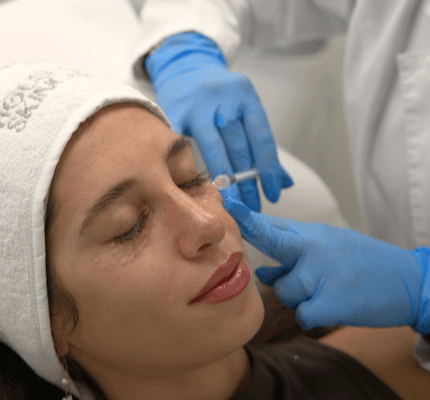
BENEFITS
FAQS
Can tear trough filler remove dark circles?<\\\\/a><\\\\/h5>
Is tear trough filler safe?<\\\\/a><\\\\/h5>
How long does tear trough filler last in Abu Dhabi?<\\\\/a><\\\\/h5>
What is the difference between tear trough filler and polynucleotides for the under eye?<\\\\/a><\\\\/h5>
How much does under eye treatment cost in Abu Dhabi?<\\\\/a><\\\\/h5>
”Under
Why House of Skincare for Under Eye Treatment?<\\\\/h2>\
Understanding the Causes of Under-Eye Concerns<\\\\/h2>\
Tear Trough Filler<\\\\/h2>\
Polynucleotides for the Under-Eye Area<\\\\/h2>\
Topical Treatments for Under-Eye Pigmentation<\\\\/h2>\
Before Your Treatment<\\\\/h2>\
\
Stop blood-thinning supplements 5 to 7 days before filler treatment.
\
Avoid alcohol for 24 hours before.
\
If you have had previous filler placed by another clinic, inform Dr. Al Zaabi at consultation. Previous filler affects the anatomy and may need to be assessed before new product is placed.<\\\\/p>\After Your Treatment<\\\\/h2>\
\
Mild swelling and bruising are common for 3 to 5 days. Cold compresses reduce swelling.
\
Avoid strenuous activity and saunas for 24 hours.
\
Results from filler settle fully over 7 to 10 days as the HA integrates and swelling resolves.
\
Apply SPF 50 daily after polynucleotide treatment. UV exposure slows skin regeneration in treated tissue.<\\\\/p>\Alternative and Related Treatments<\\\\/h2>\
”BENEFITS”
\
<\\\\/ul>\
”FAQS”
Can tear trough filler remove dark circles?<\\\\/a><\\\\/h5>\
<\\\\/div>\
<\\\\/div>\
Is tear trough filler safe?<\\\\/a><\\\\/h5>\
<\\\\/div>\
<\\\\/div>\
How long does tear trough filler last in Abu Dhabi?<\\\\/a><\\\\/h5>\
<\\\\/div>\
<\\\\/div>\
What is the difference between tear trough filler and polynucleotides for the under eye?<\\\\/a><\\\\/h5>\
<\\\\/div>\
<\\\\/div>\
How much does under eye treatment cost in Abu Dhabi?<\\\\/a><\\\\/h5>\
<\\\\/div>\
<\\\\/div>\
<\\\\/div>\
<\\\\/div>“,”rendered”:”
”Under
\<\\\\/p>
\<\\\\/p>Why House of Skincare for Under Eye Treatment?<\\\\/h2>
\<\\\\/p>Understanding the Causes of Under-Eye Concerns<\\\\/h2>
\<\\\\/p>Tear Trough Filler<\\\\/h2>
\<\\\\/p>Polynucleotides for the Under-Eye Area<\\\\/h2>
\<\\\\/p>Topical Treatments for Under-Eye Pigmentation<\\\\/h2>
\<\\\\/p>Before Your Treatment<\\\\/h2>
\
Stop blood-thinning supplements 5 to 7 days before filler treatment.
\
Avoid alcohol for 24 hours before.
\
If you have had previous filler placed by another clinic, inform Dr. Al Zaabi at consultation. Previous filler affects the anatomy and may need to be assessed before new product is placed.<\\\\/p>
\<\\\\/p>After Your Treatment<\\\\/h2>
\
Mild swelling and bruising are common for 3 to 5 days. Cold compresses reduce swelling.
\
Avoid strenuous activity and saunas for 24 hours.
\
Results from filler settle fully over 7 to 10 days as the HA integrates and swelling resolves.
\
Apply SPF 50 daily after polynucleotide treatment. UV exposure slows skin regeneration in treated tissue.<\\\\/p>
\<\\\\/p>Alternative and Related Treatments<\\\\/h2>
”BENEFITS”
<\\\\/ul>
”FAQS”
Can tear trough filler remove dark circles?<\\\\/a><\\\\/h5>
<\\\\/div>
<\\\\/div>
Is tear trough filler safe?<\\\\/a><\\\\/h5>
<\\\\/div>
<\\\\/div>
How long does tear trough filler last in Abu Dhabi?<\\\\/a><\\\\/h5>
<\\\\/div>
<\\\\/div>
What is the difference between tear trough filler and polynucleotides for the under eye?<\\\\/a><\\\\/h5>
<\\\\/div>
<\\\\/div>
How much does under eye treatment cost in Abu Dhabi?<\\\\/a><\\\\/h5>
<\\\\/div>
<\\\\/div>
<\\\\/div>
”Under
Why House of Skincare for Under Eye Treatment?<\\\\/h2>
Understanding the Causes of Under-Eye Concerns<\\\\/h2>
Tear Trough Filler<\\\\/h2>
Polynucleotides for the Under-Eye Area<\\\\/h2>
Topical Treatments for Under-Eye Pigmentation<\\\\/h2>
Before Your Treatment<\\\\/h2>
\
Stop blood-thinning supplements 5 to 7 days before filler treatment.
\
Avoid alcohol for 24 hours before.
\
If you have had previous filler placed by another clinic, inform Dr. Al Zaabi at consultation. Previous filler affects the anatomy and may need to be assessed before new product is placed.<\\\\/p>After Your Treatment<\\\\/h2>
\
Mild swelling and bruising are common for 3 to 5 days. Cold compresses reduce swelling.
\
Avoid strenuous activity and saunas for 24 hours.
\
Results from filler settle fully over 7 to 10 days as the HA integrates and swelling resolves.
\
Apply SPF 50 daily after polynucleotide treatment. UV exposure slows skin regeneration in treated tissue.<\\\\/p>Alternative and Related Treatments<\\\\/h2>
”BENEFITS”
\<\\\\/p>
<\\\\/ul>”FAQS”
Can tear trough filler remove dark circles?<\\\\/a><\\\\/h5>
<\\\\/p><\\\\/div>
<\\\\/p><\\\\/div>Is tear trough filler safe?<\\\\/a><\\\\/h5>
<\\\\/p><\\\\/div>
<\\\\/p><\\\\/div>How long does tear trough filler last in Abu Dhabi?<\\\\/a><\\\\/h5>
<\\\\/p><\\\\/div>
<\\\\/p><\\\\/div>What is the difference between tear trough filler and polynucleotides for the under eye?<\\\\/a><\\\\/h5>
<\\\\/p><\\\\/div>
<\\\\/p><\\\\/div>How much does under eye treatment cost in Abu Dhabi?<\\\\/a><\\\\/h5>
<\\\\/p><\\\\/div>
<\\\\/p><\\\\/div>
<\\\\/p><\\\\/div>
<\\\\/p><\\\\/div>
<\\\\/div>“,”rendered”:””Under
\<\\\/p>
\<\\\/p>Why House of Skincare for Under Eye Treatment?<\\\\/h2>\<\\\/p>
\<\\\/p>Understanding the Causes of Under-Eye Concerns<\\\\/h2>\<\\\/p>
\<\\\/p>Tear Trough Filler<\\\\/h2>\<\\\/p>
\<\\\/p>Polynucleotides for the Under-Eye Area<\\\\/h2>\<\\\/p>
\<\\\/p>Topical Treatments for Under-Eye Pigmentation<\\\\/h2>\<\\\/p>
\<\\\/p>Before Your Treatment<\\\\/h2>\<\\\/p>
Stop blood-thinning supplements 5 to 7 days before filler treatment.
Avoid alcohol for 24 hours before.
If you have had previous filler placed by another clinic, inform Dr. Al Zaabi at consultation. Previous filler affects the anatomy and may need to be assessed before new product is placed.<\\\\/p>\
\<\\\/p>After Your Treatment<\\\\/h2>\<\\\/p>
Mild swelling and bruising are common for 3 to 5 days. Cold compresses reduce swelling.
Avoid strenuous activity and saunas for 24 hours.
Results from filler settle fully over 7 to 10 days as the HA integrates and swelling resolves.
Apply SPF 50 daily after polynucleotide treatment. UV exposure slows skin regeneration in treated tissue.<\\\\/p>\
\<\\\/p>Alternative and Related Treatments<\\\\/h2>\<\\\/p>
”BENEFITS”
”FAQS”
Can tear trough filler remove dark circles?<\\\\/a><\\\\/h5><\\\/p>
Is tear trough filler safe?<\\\\/a><\\\\/h5><\\\/p>
How long does tear trough filler last in Abu Dhabi?<\\\\/a><\\\\/h5><\\\/p>
What is the difference between tear trough filler and polynucleotides for the under eye?<\\\\/a><\\\\/h5><\\\/p>
How much does under eye treatment cost in Abu Dhabi?<\\\\/a><\\\\/h5><\\\/p>
”Under
Why House of Skincare for Under Eye Treatment?<\\\\/h2>\<\\\/p>
Understanding the Causes of Under-Eye Concerns<\\\\/h2>\<\\\/p>
Tear Trough Filler<\\\\/h2>\<\\\/p>
Polynucleotides for the Under-Eye Area<\\\\/h2>\<\\\/p>
Topical Treatments for Under-Eye Pigmentation<\\\\/h2>\<\\\/p>
Before Your Treatment<\\\\/h2>\<\\\/p>
\
Stop blood-thinning supplements 5 to 7 days before filler treatment.
\
Avoid alcohol for 24 hours before.
\
If you have had previous filler placed by another clinic, inform Dr. Al Zaabi at consultation. Previous filler affects the anatomy and may need to be assessed before new product is placed.<\\\\/p>\<\\\/p>After Your Treatment<\\\\/h2>\<\\\/p>
\
Mild swelling and bruising are common for 3 to 5 days. Cold compresses reduce swelling.
\
Avoid strenuous activity and saunas for 24 hours.
\
Results from filler settle fully over 7 to 10 days as the HA integrates and swelling resolves.
\
Apply SPF 50 daily after polynucleotide treatment. UV exposure slows skin regeneration in treated tissue.<\\\\/p>\<\\\/p>Alternative and Related Treatments<\\\\/h2>\<\\\/p>
”BENEFITS”
\<\\\/p>
<\\\\/ul>\<\\\/p>
”FAQS”
Can tear trough filler remove dark circles?<\\\\/a><\\\\/h5>\<\\\/p>
<\\\\/div>\
<\\\\/div>\<\\\/p>
Is tear trough filler safe?<\\\\/a><\\\\/h5>\<\\\/p>
<\\\\/div>\
<\\\\/div>\<\\\/p>
How long does tear trough filler last in Abu Dhabi?<\\\\/a><\\\\/h5>\<\\\/p>
<\\\\/div>\
<\\\\/div>\<\\\/p>
What is the difference between tear trough filler and polynucleotides for the under eye?<\\\\/a><\\\\/h5>\<\\\/p>
<\\\\/div>\
<\\\\/div>\<\\\/p>
How much does under eye treatment cost in Abu Dhabi?<\\\\/a><\\\\/h5>\<\\\/p>
<\\\\/div>\
<\\\\/div>\
<\\\\/div>\<\\\/p>
<\\\\/div>“,”rendered”:”<\\\/p>
”Under
\<\\\\/p><\\\/p>
\<\\\\/p><\\\/p>Why House of Skincare for Under Eye Treatment?<\\\\/h2><\\\/p>
\<\\\\/p><\\\/p>Understanding the Causes of Under-Eye Concerns<\\\\/h2><\\\/p>
\<\\\\/p><\\\/p>Tear Trough Filler<\\\\/h2><\\\/p>
\<\\\\/p><\\\/p>Polynucleotides for the Under-Eye Area<\\\\/h2><\\\/p>
\<\\\\/p><\\\/p>Topical Treatments for Under-Eye Pigmentation<\\\\/h2><\\\/p>
\<\\\\/p><\\\/p>Before Your Treatment<\\\\/h2><\\\/p>
\
Stop blood-thinning supplements 5 to 7 days before filler treatment.
\
Avoid alcohol for 24 hours before.
\
If you have had previous filler placed by another clinic, inform Dr. Al Zaabi at consultation. Previous filler affects the anatomy and may need to be assessed before new product is placed.<\\\\/p><\\\/p>
\<\\\\/p><\\\/p>After Your Treatment<\\\\/h2><\\\/p>
\
Mild swelling and bruising are common for 3 to 5 days. Cold compresses reduce swelling.
\
Avoid strenuous activity and saunas for 24 hours.
\
Results from filler settle fully over 7 to 10 days as the HA integrates and swelling resolves.
\
Apply SPF 50 daily after polynucleotide treatment. UV exposure slows skin regeneration in treated tissue.<\\\\/p><\\\/p>
\<\\\\/p><\\\/p>Alternative and Related Treatments<\\\\/h2><\\\/p>
”BENEFITS”
<\\\\/ul><\\\/p>
”FAQS”
Can tear trough filler remove dark circles?<\\\\/a><\\\\/h5><\\\/p>
<\\\\/div>
<\\\\/div><\\\/p>
Is tear trough filler safe?<\\\\/a><\\\\/h5><\\\/p>
<\\\\/div>
<\\\\/div><\\\/p>