
Acne Treatment in Abu Dhabi
$
Acne Treatment in Abu Dhabi
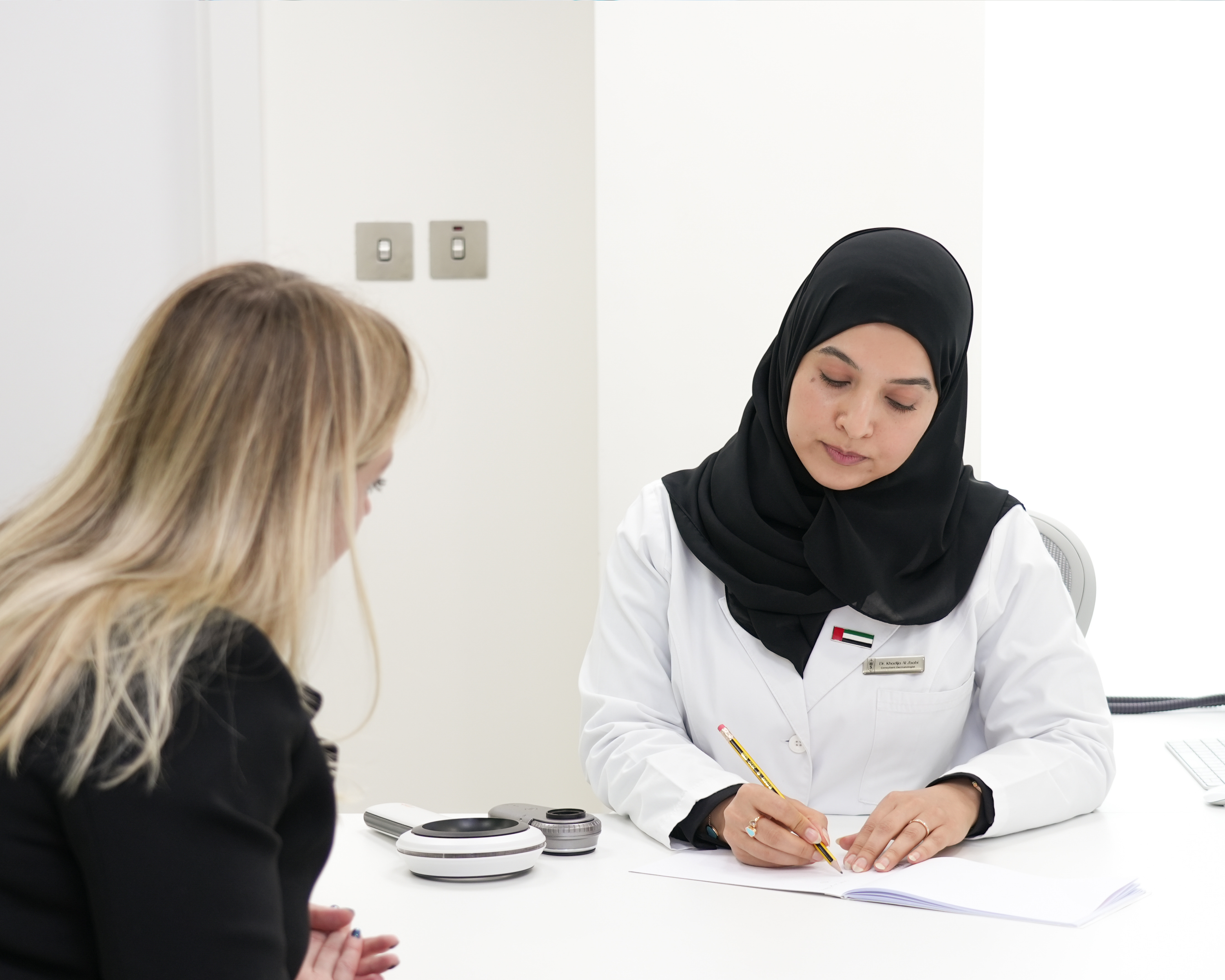
Acne treatment in Abu Dhabi requires a different approach than in cooler climates. Heat, high humidity, heavy SPF use, and the rapid cycle between outdoor conditions and air conditioning all affect sebum production, skin microbiome balance, and the rate at which follicular congestion develops into active breakouts. At House of Skincare on Yas Island, Dr. Khadija Al Zaabi, DOH-licensed Consultant Dermatologist with over 21 years of clinical experience, treats acne as a medical condition with a defined pathophysiology. The treatment plan starts from diagnosis, not from whatever product is being promoted.
Acne is the most common skin condition Dr. Al Zaabi treats. It is also the one most commonly under-treated or mismanaged by over-the-counter products, inadequate topical regimens, and clinics that offer in-clinic treatments without addressing the underlying cause. Effective acne management combines physician-prescribed topical and oral treatment with in-clinic procedures targeted to the specific type and severity of the patient’s acne. Getting this right requires a dermatologist.
Why House of Skincare for Acne Treatment?
Dr. Al Zaabi classifies acne by type, grade, and distribution before prescribing any treatment. She assesses contributing factors including skincare routine, diet, hormonal status, medication history, and whether previous treatments have been tried. The treatment plan addresses the root cause, not just the surface presentation. She prescribes regulated medications including topical retinoids, antibiotics, and oral isotretinoin where clinically indicated, treatments that require a licensed physician and cannot be obtained over the counter in the UAE.
House of Skincare holds a 4.9-star patient rating. Acne treatment at this clinic is a complete medical programme, not a facial with a few active ingredients. The outcome of a physician-directed acne programme is substantially better than non-medical skin clinic approaches.
Understanding Acne: Types and Causes
Acne vulgaris develops through four interacting processes: excess sebum production, abnormal follicular keratinisation (the cells lining the follicle shed incorrectly and block the opening), colonisation of the blocked follicle by Cutibacterium acnes bacteria, and the inflammatory response that follows.
Non-inflammatory acne: Whiteheads (closed comedones) and blackheads (open comedones) represent blocked follicles without significant bacterial activity or immune response. These are the early-stage acne that responds well to topical retinoids and regular extraction-based treatments.
Inflammatory acne: Papules (small red bumps), pustules (papules with a visible pus head), nodules (deep, solid lesions), and cysts (deep, fluid-filled painful lesions) represent increasing degrees of immune response to follicular bacteria. Nodular and cystic acne carry the highest risk of permanent scarring and require the most aggressive treatment approach.
Hormonal acne: Adult-onset acne in women, particularly presenting along the jawline, chin, and lower face, is often driven by androgen excess or androgen-sensitivity of the sebaceous glands. This pattern often worsens before menstruation and may respond partially to standard topical treatment but fully requires hormonal assessment and management. Dr. Al Zaabi addresses this at consultation and coordinates hormonal assessment where appropriate.
Post-inflammatory hyperpigmentation (PIH): Brown marks left after active acne lesions resolve are not scars. They are post-inflammatory pigmentation that fades over time, typically 3 to 12 months, with appropriate skincare and sun protection. Patients frequently present requesting scar treatment when the primary issue is PIH. Dr. Al Zaabi distinguishes between these at assessment, as they require different treatment approaches.
Acne Treatments at House of Skincare
Physician-Prescribed Topical Therapy: The foundation of all acne treatment at House of Skincare is a physician-directed topical regimen. Topical retinoids (tretinoin or adapalene) normalise follicular keratinisation and reduce comedone formation. Benzoyl peroxide reduces C. acnes colonisation with no resistance risk. Topical antibiotics (clindamycin, erythromycin) reduce inflammatory load in mild to moderate inflammatory acne. Azelaic acid has anti-inflammatory, antibacterial, and depigmenting properties, making it useful for acne with significant PIH. The specific combination is based on your acne type, skin tone, and previous treatment history. These are not generic skincare recommendations. They are medical prescriptions.
Oral Antibiotics: For moderate to severe inflammatory acne, a course of oral antibiotics combined with topical therapy is the standard approach. Doxycycline is the most commonly used. Oral antibiotics reduce systemic inflammatory load rapidly, with improvement typically visible within 6 to 8 weeks. They are prescribed for defined courses, not indefinitely, to minimise antibiotic resistance. Topical treatment continues after oral antibiotics are completed.
Oral Isotretinoin: For severe nodulo-cystic acne, acne that has failed other treatment, or acne that is producing significant scarring, oral isotretinoin (Roaccutane) remains the most effective treatment available. It reduces sebum production by up to 90 percent, normalises follicular keratinisation, reduces bacterial colonisation, and has a durable effect on acne after a completed course. It requires a licensed dermatologist to prescribe and monitor. Dr. Al Zaabi prescribes isotretinoin where clinically indicated, with appropriate monitoring including blood tests and pregnancy prevention in female patients of childbearing age.
Chemical Peels: Superficial chemical peels using salicylic acid, mandelic acid, or glycolic acid are used at House of Skincare as an in-clinic component of the acne treatment programme. Salicylic acid is lipid-soluble and penetrates the follicle, dissolving the plug and reducing sebum accumulation. Regular monthly peels accelerate the clearing of comedones, reduce active inflammation, and speed the resolution of post-inflammatory hyperpigmentation. They work alongside prescribed topical therapy, not as a replacement for it.
Carbon Laser Facial: The carbon laser facial uses a Q-switched Nd:YAG laser over a layer of carbon suspension applied to the skin. The laser vaporises the carbon particles within the follicle opening, physically opening and clearing congested pores, while the thermal energy delivered to the sebaceous gland transiently reduces sebum production. It has a documented antibacterial effect on C. acnes through photodynamic action. Monthly sessions are used as maintenance for mild to moderate acne and to prevent congestion recurrence in patients who have cleared their active acne through prescription treatment. This is covered in full on the Carbon Laser Facial page.
HydraFacial for Acne: HydraFacial with the acne-targeted serum infusion addresses surface congestion, extracts comedones painlessly, and infuses salicylic acid and anti-inflammatory actives. It is appropriate for mild comedonal and early inflammatory acne, for acne-prone patients who need regular maintenance clearing, and for patients in the maintenance phase after active acne has resolved. It is not sufficient as a standalone treatment for moderate to severe inflammatory acne.
LED Phototherapy: Blue LED light at 415nm has a bactericidal effect on Cutibacterium acnes through the activation of endogenous porphyrins within the bacteria. Red LED at 633nm reduces inflammation and accelerates tissue repair. Combined blue and red LED sessions are used as an adjunct to the primary acne treatment programme, accelerating improvement in active inflammatory lesions with no downtime. Sessions are typically 20 minutes and can be added to other in-clinic treatments.
Potenza RF Microneedling: For patients with active acne who also have early scarring, Potenza RF microneedling delivers radiofrequency energy into the dermis to stimulate collagen and begin remodelling of early scar tissue. It is used in the maintenance phase once active acne is controlled, not during active breakouts. This treatment is covered in full on the Acne Scar Treatment page.
Acne in Abu Dhabi’s Climate
Abu Dhabi’s environment creates specific acne challenges. High summer temperatures increase sebum production. Heavy-formula sunscreens, which are essential for skin health, can be comedogenic if not selected carefully. Frequent sweating from outdoor activity, sport, or simply being outside clogs follicles faster than in temperate climates. Air conditioning causes skin dehydration, which paradoxically increases oil production as the skin compensates.
Dr. Al Zaabi reviews your skincare routine as part of the acne assessment. The specific SPF formulation you are using, your cleanser, and your moisturiser all affect acne outcome. Non-comedogenic, lightweight, oil-free formulas are prescribed as part of the treatment programme, matched to your skin type and acne severity.
How Long Does Acne Treatment Take?
Topical retinoids take 6 to 12 weeks to show significant improvement. The first 4 to 6 weeks often include a purging phase where skin may temporarily worsen before it clears. This is a normal physiological response to accelerated follicular turnover and not a reason to stop treatment. Oral antibiotics show improvement in 6 to 8 weeks. Isotretinoin produces significant improvement by month 2 to 3 and typically achieves full clearance by month 4 to 6 of a standard course.
Acne management is not a short-term intervention. Even after active acne clears, a maintenance programme is required to prevent relapse. Dr. Al Zaabi reviews progress at scheduled follow-up appointments and adjusts the programme based on response.
Alternative and Related Treatments
Carbon Laser Facial: For acne maintenance and oil control, the carbon laser facial delivers immediate pore clearing and transient sebum reduction. It is used as an ongoing maintenance treatment between prescription therapy reviews and is particularly popular for patients who want regular in-clinic sessions to sustain their acne improvement.
Acne Scar Treatment: Once active acne is controlled, residual scarring can be addressed with Potenza RF microneedling, chemical peels, or laser resurfacing. The severity of the scar type determines which treatment is appropriate. See the Acne Scar Treatment page at House of Skincare for full detail on scar revision options.
MelaDeep for Post-Inflammatory Hyperpigmentation: For patients whose primary visible concern after acne is the brown marks that remain, MelaDeep mesotherapy delivers tyrosinase inhibitors and brightening actives directly into the dermis to accelerate the resolution of PIH. Combined with topical tranexamic acid, the improvement in post-acne pigmentation is substantially faster than leaving it to resolve naturally.
BENEFITS
- Full acne classification by type, grade and contributing factors before treatment
- Physician-prescribed topical retinoids, antibiotics and oral isotretinoin where indicated
- In-clinic: carbon laser, chemical peels, HydraFacial and LED phototherapy
- Hormonal acne assessment and coordination with GP where appropriate
- Non-comedogenic skincare prescriptions matched to Abu Dhabi’s climate
- Supervised by DOH-licensed Consultant Dermatologist with 21+ years