
Dermalux LED Therapy in Abu Dhabi
$
Dermalux LED Therapy in Abu Dhabi
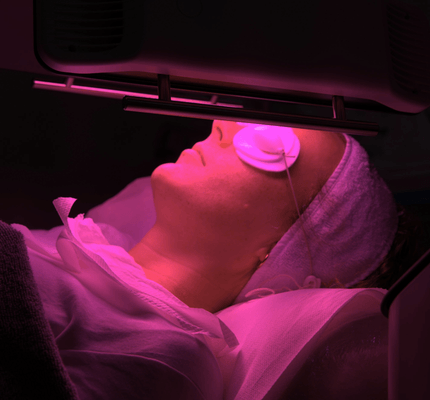
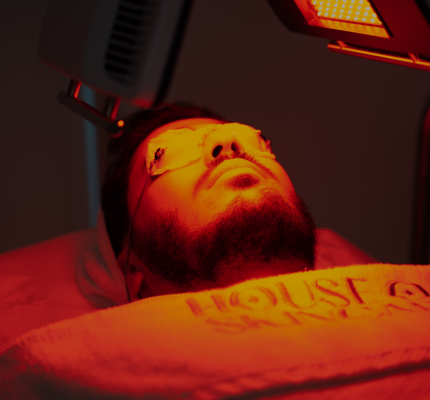
Dermalux LED therapy in Abu Dhabi at House of Skincare uses the Dermalux Flex MD — the gold-standard medical-grade LED system used in leading clinics across London and the United States. It delivers clinically proven wavelengths of light at therapeutic doses to stimulate the skin’s own repair mechanisms, reduce inflammation, and produce measurable improvements in acne, rosacea, fine lines, and overall skin quality. No heat, no UV, no downtime.
Dr. Khadija Al Zaabi, DOH-licensed Consultant Dermatologist with over 21 years of clinical experience, integrates Dermalux into treatment plans both as a standalone course and as a post-procedure recovery accelerator. The wavelength protocol — blue, red, or near-infrared — is selected based on your specific skin concern, not applied generically.
Why House of Skincare for Dermalux LED?
LED results depend entirely on wavelength accuracy, irradiance, and treatment duration. The Dermalux Flex MD delivers all three wavelengths simultaneously — what the manufacturer calls Tri-Wave technology — at consistent, calibrated therapeutic doses that lower-grade LED devices cannot match. Dr. Al Zaabi selects the appropriate protocol for each patient and integrates Dermalux within a broader treatment plan where it adds the most clinical value: immediately post-microneedling, post-laser, and post-peel to accelerate healing, or as a standalone course for acne, rosacea, and skin rejuvenation.
How Dermalux LED Works
Dermalux delivers specific wavelengths of non-thermal light that are absorbed by chromophores in skin cells — a process called photobiomodulation. Light energy is absorbed by cytochrome c oxidase in the cell mitochondria, increasing ATP production and triggering intracellular signalling pathways that drive collagen synthesis, bacterial destruction, tissue repair, and inflammation reduction. Unlike laser or IPL, there is no heat and no structural damage — all effects are photochemical. The skin is not injured. It is energised.
Results continue developing for 4 to 6 weeks after a course completes, as collagen synthesis and cellular repair proceed beyond the treatment window.
The Three Dermalux Wavelengths
Blue light (415 nm): Targets and destroys Cutibacterium acnes bacteria by activating bacterial porphyrins, generating reactive oxygen species that kill the organism at the source. Reduces active breakouts and prevents new ones from forming. The clinical first-line adjunctive treatment for inflammatory acne.
Red light (633 nm): Penetrates the dermis to stimulate fibroblasts and collagen and elastin production. Accelerates cell renewal, improves hydration and firmness, reduces redness and inflammation. The primary wavelength for anti-ageing, rosacea, and general skin rejuvenation.
Near-infrared (830 nm): The deepest-penetrating wavelength. Reduces inflammation at tissue level, accelerates wound healing, improves circulation, and calms reactive skin. The standard protocol after ablative laser, microneedling, and chemical peels to shorten recovery time and reduce post-procedure redness.
Conditions Treated with Dermalux
Active acne and acne-prone skin: Blue light destroys the bacteria driving breakouts; red light reduces the post-inflammatory redness and supports healing. Combined, they address both the cause and the consequence.
Rosacea and chronic facial redness: Red and near-infrared wavelengths reduce the vascular inflammation underlying rosacea, calming reactive skin without triggering a flare.
Fine lines and skin laxity: Red light stimulates fibroblast activity and collagen synthesis over a course of sessions, improving skin firmness and reducing the depth of superficial lines.
Post-procedure recovery: Near-infrared immediately after microneedling, laser resurfacing, or chemical peels reduces redness, accelerates healing, and extends the collagen response initiated by the primary treatment.
Pigmentation, sun damage, and dull skin: Accelerated cell turnover and improved circulation from red light improve overall skin tone and surface texture across a course.
Eczema, psoriasis, and sensitive skin: Anti-inflammatory effects across all three wavelengths make Dermalux suitable for chronic inflammatory skin conditions where heat-based treatments are contraindicated.
How Many Sessions?
Standalone course: 6 to 10 sessions, one to two per week — most patients see visible improvement from session four onwards.
Post-procedure add-on: one to three sessions immediately following microneedling, laser, or peels to accelerate recovery.
Maintenance: monthly sessions to sustain results once the primary concern is under control.
BENEFITS
- Dermalux Flex MD — the gold-standard medical LED device used in leading London and US clinics
- Tri-Wave technology delivers blue, red, and near-infrared simultaneously at calibrated therapeutic doses
- Treats active acne, rosacea, fine lines, pigmentation, and sensitive skin conditions
- Accelerates recovery after laser, microneedling, and chemical peels
- Safe for all Fitzpatrick skin types — no heat, no UV, no downtime
- DOH-licensed Consultant Dermatologist selects the protocol for your specific concern