
PRP Hair Loss Treatment in Abu Dhabi
$
PRP Hair Loss Treatment in Abu Dhabi
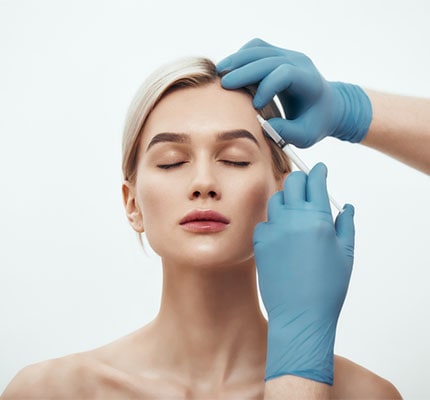
PRP hair loss treatment in Abu Dhabi is one of the most established non-surgical options for patients with androgenetic alopecia (pattern hair loss) and other forms of hair thinning. At House of Skincare on Yas Island, platelet-rich plasma therapy involves drawing a small amount of your own blood, processing it in a centrifuge to concentrate the platelets and growth factors, and injecting the resulting PRP directly into the scalp at the level of the hair follicle. Dr. Khadija Al Zaabi, DOH-licensed Consultant Dermatologist with over 21 years of clinical experience, performs all scalp assessments and PRP injections personally and determines whether PRP is appropriate for your specific hair loss type before any treatment begins.
Hair loss is a condition where the cause matters as much as the treatment. PRP is effective for specific diagnoses and produces limited results in others. Androgenetic alopecia (male and female pattern hair loss) is the most common condition where PRP has documented efficacy. Alopecia areata, telogen effluvium, and nutritional or hormonal hair loss respond differently. The first priority at House of Skincare is accurate diagnosis, including trichoscopy where indicated, before a treatment plan is formed.
Why House of Skincare for PRP Hair Treatment?
Dr. Al Zaabi diagnoses the type of hair loss before recommending any treatment. A trichoscopy examination assesses the hair follicle structure and determines whether the follicles are viable, which determines whether PRP will stimulate a meaningful response. She also reviews relevant bloodwork, as nutritional deficiencies, thyroid dysfunction, and hormonal imbalances are common contributors to hair loss that must be addressed alongside PRP for the treatment to achieve its potential.
House of Skincare holds a 4.9-star patient rating and is DOH-licensed for all injectable treatments. PRP is not a passive treatment. The concentration achieved, the injection depth, and the consistency of the treatment course all determine whether the result is meaningful or not. Physician oversight makes the difference.
What Is PRP and How Does It Work for Hair?
Platelet-rich plasma is a concentration of platelets derived from your own blood. Blood consists of red cells, white cells, platelets, and plasma. When blood is centrifuged, the components separate by density. The platelet-rich layer is extracted and reinjected, delivering a concentration of platelets that is 3 to 5 times higher than in normal blood.
Platelets are storage cells for a range of growth factors that regulate tissue repair and regeneration. The growth factors relevant to hair follicle stimulation include platelet-derived growth factor (PDGF), vascular endothelial growth factor (VEGF), epidermal growth factor (EGF), and insulin-like growth factor-1 (IGF-1). When these are injected into the scalp at follicle depth, they activate the dermal papilla, the structure that controls whether a follicle produces hair, and extend the anagen (growth) phase of the hair cycle.
The result, over a course of sessions, is a reduction in the rate of miniaturisation of affected follicles, increased hair shaft diameter, and stimulation of dormant follicles back into an active growth phase. PRP does not restore follicles that have been permanently destroyed by long-standing androgenetic alopecia. It works most effectively on follicles that have miniaturised but retain capacity for regeneration. This is why treatment is more effective in earlier-stage hair loss than in advanced cases where significant permanent follicle loss has already occurred.
Hair Loss Conditions Treated at House of Skincare
Androgenetic alopecia (male pattern and female pattern hair loss): The most common indication for PRP. Androgenetic alopecia is driven by dihydrotestosterone (DHT) binding to androgen receptors in the follicle, causing progressive miniaturisation. PRP growth factors counteract this process by extending the anagen phase and stimulating the dermal papilla. Evidence from multiple clinical trials supports PRP as a meaningful adjunct to medical treatment with minoxidil or finasteride. It does not replace medical therapy but significantly improves outcomes when combined with it.
Female diffuse thinning: Women presenting with diffuse thinning across the crown and mid-scalp, with or without a family history, often have androgenetic alopecia combined with contributing factors such as iron deficiency, thyroid dysfunction, or post-partum telogen effluvium. Dr. Al Zaabi assesses the contributing factors before proceeding. When the root cause is identified and addressed, PRP produces faster and more durable improvement.
Alopecia areata: The evidence for PRP in alopecia areata is less consistent than for androgenetic alopecia, but clinical studies support its use in stable, limited patches where other treatments have not been fully effective. Dr. Al Zaabi assesses each case individually and discusses realistic expectations for this indication.
Traction alopecia: Hair loss caused by chronic tension from hairstyles can damage follicles along the hairline. If follicles are still viable, PRP injected along the affected hairline can stimulate regrowth once the traction cause is removed. Assessment of follicle viability with trichoscopy is performed before treatment is recommended.
Hair loss after illness or stress (telogen effluvium): Significant physical or emotional stress, illness, surgery, or rapid weight loss can push a large proportion of follicles simultaneously into the telogen (resting) phase, causing diffuse shedding 3 to 4 months after the trigger. Most telogen effluvium resolves spontaneously within 6 to 9 months. PRP can accelerate the return to the active growth phase and is considered when the shedding is prolonged or recovery is slower than expected.
How Many PRP Sessions Are Required?
The standard initial course at House of Skincare is 4 sessions, spaced 4 to 6 weeks apart. This concentration of treatment in the early phase is important because follicle response to PRP is cumulative: each session builds on the preceding one. Significant improvement in hair density and shaft diameter is typically visible 3 to 6 months after the first session as newly stimulated follicles progress through the growth cycle.
After the initial course, maintenance sessions are recommended every 3 to 6 months to sustain the follicle stimulation. Androgenetic alopecia is a progressive condition. Without ongoing treatment, the DHT-driven miniaturisation process resumes. Maintenance PRP, combined with continued topical or oral medical therapy, keeps the improvement stable long term.
Early-stage hair loss generally responds better than advanced-stage. Dr. Al Zaabi sets realistic expectations at consultation based on the stage of hair loss, follicle viability assessment on trichoscopy, and your individual growth factor response.
Combining PRP with Other Hair Loss Treatments
PRP produces significantly better results when combined with the appropriate medical treatment for androgenetic alopecia.
Minoxidil: Topical minoxidil (available without prescription) extends the anagen phase and increases scalp blood flow. Combined with PRP, which adds growth factor stimulation directly to the follicle, the combined effect on hair density is greater than either treatment alone. Dr. Al Zaabi reviews your current use of minoxidil and advises on formulation and concentration.
Oral finasteride or dutasteride (men): These medications reduce DHT production and address the hormonal driver of androgenetic alopecia. They are the most effective medical treatments for male pattern hair loss when tolerated. PRP combined with a 5-alpha reductase inhibitor produces the most complete response in male androgenetic alopecia.
Nutritional optimisation: Iron deficiency, low ferritin, zinc deficiency, and thyroid dysfunction all impair hair growth independently of the primary hair loss condition. Dr. Al Zaabi reviews relevant blood tests and prescribes supplementation where deficiencies are identified. PRP on a nutritionally deficient patient produces a reduced response.
What to Expect at Your Session
A blood draw of approximately 15 to 20ml is taken at the start of each session, the same volume as a standard blood test. The blood is centrifuged in the clinic to separate the platelet-rich layer, which is then prepared for injection. The scalp is cleansed and topical anaesthetic spray or cream is applied before injection. PRP is injected in a grid pattern across the treatment area at the appropriate depth for scalp thickness, typically 4 to 5mm. Each session takes 30 to 45 minutes in total.
Most patients describe mild stinging during injection and mild scalp soreness for 24 hours after. There is no visible change to the scalp appearance after treatment, which resolves any post-treatment redness within a few hours.
Before Your Session
Wash your hair on the morning of your appointment.
Stop any blood-thinning supplements 5 to 7 days before.
Stay well hydrated before your appointment to support a good blood draw.
Avoid alcohol for 24 hours before.
Inform Dr. Al Zaabi of all medications, as some affect platelet function.
After Your Session
Avoid washing the scalp for 24 hours after treatment.
Avoid heat styling tools, steam rooms, and saunas for 48 hours.
Avoid vigorous exercise and heavy sweating for 24 hours.
Protect the scalp from direct sun exposure with a hat or SPF application.
Continue your prescribed topical treatments as normal from the day after your session.
Alternative and Related Treatments
Exosome Therapy for Hair Loss: Exosome therapy uses extracellular vesicles derived from stem cells to deliver a signalling complex directly to the hair follicle. The mechanism is similar to PRP but the active payload of growth factors and regulatory microRNA is more concentrated and consistent than what can be derived from autologous blood. At House of Skincare, exosome therapy is used for patients who do not respond sufficiently to PRP or who want a more intensive treatment. The two can also be combined in the same session. See the Exosome Therapy page for full detail.
Mesotherapy for Hair Loss (Mesogun): Scalp mesotherapy uses the Mesogun device to deliver a microinjected cocktail of vitamins, amino acids, and hair growth actives directly into the scalp at consistent depth and distribution. It provides nutritional and stimulatory support to the follicle environment and is used alongside PRP in an alternating monthly programme for patients requiring comprehensive hair loss management. See the Mesogun page at House of Skincare.
Dermal Roller / Microneedling for Hair: Scalp microneedling creates microchannels in the dermis that stimulate dermal papilla activity through the wound healing response, independently of any injected agent. It also significantly improves the absorption of topical minoxidil applied immediately after the procedure. This can be used as a lower-intensity, more affordable adjunct to PRP for patients who want to maximise their home treatment programme.
BENEFITS
- Autologous PRP from your own blood with no synthetic additives
- Trichoscopy assessment of follicle viability before treatment is recommended
- Treats androgenetic alopecia, diffuse thinning, and alopecia areata
- Combined programme with minoxidil, finasteride and nutritional optimisation where indicated
- 4-session initial course with ongoing maintenance every 3 to 6 months
- Performed personally by DOH-licensed Consultant Dermatologist