
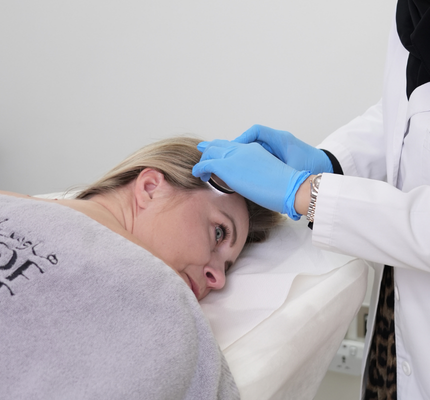
PRP for hair loss in Abu Dhabi is one of the most requested treatments at House of Skincare on Yas Island — and for good reason. Platelet-rich plasma therapy uses your own blood’s growth factors to stimulate dormant follicles, slow ongoing shedding, and improve hair density without surgery, synthetic drugs, or downtime. If you are noticing a widening parting, increased shedding, or thinning at the temples or crown, this guide covers everything you need to know before booking a consultation.
Dr. Khadija Al Zaabi, our DOH-licensed Consultant Dermatologist with over 21 years of clinical experience, supervises every PRP hair treatment at House of Skincare. The results depend heavily on the quality of the preparation system, the concentration achieved, and how accurately the injections target the dermal papilla layer — all factors that vary significantly between clinics.
What Is PRP and How Does It Work on Hair Follicles?
Your blood contains red cells, white cells, plasma, and platelets. Platelets are the components that initiate wound healing — when tissue is injured, they release a concentrated burst of growth factors that signal surrounding cells to repair and regenerate. PRP therapy isolates those platelets, concentrates them to four to six times their normal blood level, and injects that concentrate directly into the scalp at the depth of the hair follicle’s dermal papilla.
Six growth factors are central to how PRP stimulates hair:
| Growth Factor | Role in Hair Restoration |
|---|---|
| Platelet-Derived Growth Factor (PDGF) | Stimulates dermal papilla cells, promotes anagen (growth phase) entry |
| Vascular Endothelial Growth Factor (VEGF) | Triggers new blood vessel formation around the follicle, improving nutrient supply |
| Epidermal Growth Factor (EGF) | Supports cell regeneration and helps follicles enter the active growth phase |
| Fibroblast Growth Factor-2 (FGF-2) | Extends the anagen phase and promotes vascularisation around the follicle |
| Insulin-Like Growth Factor-1 (IGF-1) | Supports cell growth, repair, and differentiation within the follicle structure |
| Transforming Growth Factor-Beta (TGF-β) | Regulates follicle cycling and modulates the inflammatory environment |
Together, these signals push dormant or miniaturised follicles back toward active growth, extend the duration of the anagen phase, and improve the calibre of each hair shaft produced. The follicles are not created from scratch — PRP works on follicles that are still present but underperforming. This is why timing matters: treating earlier, when follicles are miniaturised but not yet gone, produces the best outcomes.
Which Types of Hair Loss Respond to PRP?
Not all hair loss has the same cause, and not all causes respond equally to PRP. The American Academy of Dermatology recommends that any hair loss treatment begins with identifying the underlying cause — here is how the three most common types present in our Abu Dhabi patients:
Androgenetic alopecia (pattern hair loss)
This is the most common type and the one with the strongest evidence base for PRP. In women, it typically presents as diffuse thinning along the central parting — the pattern Dr. Al Zaabi describes as a widening Christmas tree shape when looking down from above. In men, recession at the temples and thinning at the crown are characteristic. The underlying mechanism is follicle miniaturisation driven by DHT sensitivity. PRP does not block DHT, but the growth factors it delivers can counteract some of the miniaturisation process and significantly slow progression.
Telogen effluvium
This is the acute or chronic shedding that follows physiological stress: post-partum hair loss, sudden weight loss, major illness, surgery, crash dieting, or prolonged stress. Normally around 10 to 15% of follicles are in the resting telogen phase at any time. In telogen effluvium that proportion surges, causing diffuse shedding across the scalp. PRP accelerates the transition back to anagen, shortening the recovery period significantly compared with watchful waiting.
Alopecia areata (early, patchy)
The evidence for PRP in alopecia areata is less consistent than for androgenetic alopecia, but several studies have shown benefit in mild to moderate patchy cases. Severe or rapidly progressive alopecia totalis is generally outside the scope of PRP monotherapy.
Who Is a Good Candidate for PRP Hair Treatment?
- Have early to moderate hair thinning with follicles still present and active
- Are experiencing increased daily shedding or a noticeably widening parting
- Have not yet reached the stage of visible scalp baldness with absent follicles
- Are in good general health with no active blood disorders or scalp infections
- Are not pregnant or breastfeeding
- Are not on anticoagulant medication
- Are in good overall health and maintain a healthy lifestyle
- Have no untreated vitamin deficiencies (particularly vitamin D, B12, iron, or ferritin), anaemia, or malnutrition — these systemic factors directly affect follicle health and PRP response, and must be addressed before or alongside treatment
At House of Skincare, Dr. Al Zaabi uses dermoscopy (scalp microscopy) at the initial consultation to assess follicle density and activity before recommending PRP. A scalp with dense, active follicles at normal diameter responds differently from one where follicles have already miniaturised significantly. This assessment shapes the treatment plan, session spacing, and whether PRP alone or a combined protocol with Mesogun or exosome hair restoration is the better approach.
What Happens During a PRP Hair Session at House of Skincare?
1. Blood draw (5 minutes)
A small blood sample of 15 to 30 ml is taken from a vein in your arm, identical to a standard blood test.
2. Centrifugation — AAD Protocol (10–15 minutes)
The blood is placed in a dedicated PRP preparation tube and spun in a calibrated centrifuge. At House of Skincare, PRP preparation follows the American Academy of Dermatology (AAD) recommendations — a standard that distinguishes our protocol from most clinics:
- Double centrifugation: The blood is centrifuged twice rather than once. The second spin further concentrates the platelet count, producing a more potent PRP solution with a higher growth factor yield — the factor that directly determines biological effectiveness.
- Whole-scalp treatment: We treat the entire scalp, not only the visibly thinning areas. Hair loss begins at the follicle level before it becomes visible at the surface. Treating only affected patches misses the early-stage follicles that respond best and are most worth protecting.
- Two-week session intervals: Based on AAD guidance, our initial course uses 2-week intervals between sessions — tighter than the 4 to 6 weeks common at other clinics. This spacing maximises the cumulative growth factor stimulus during the critical early treatment phase.
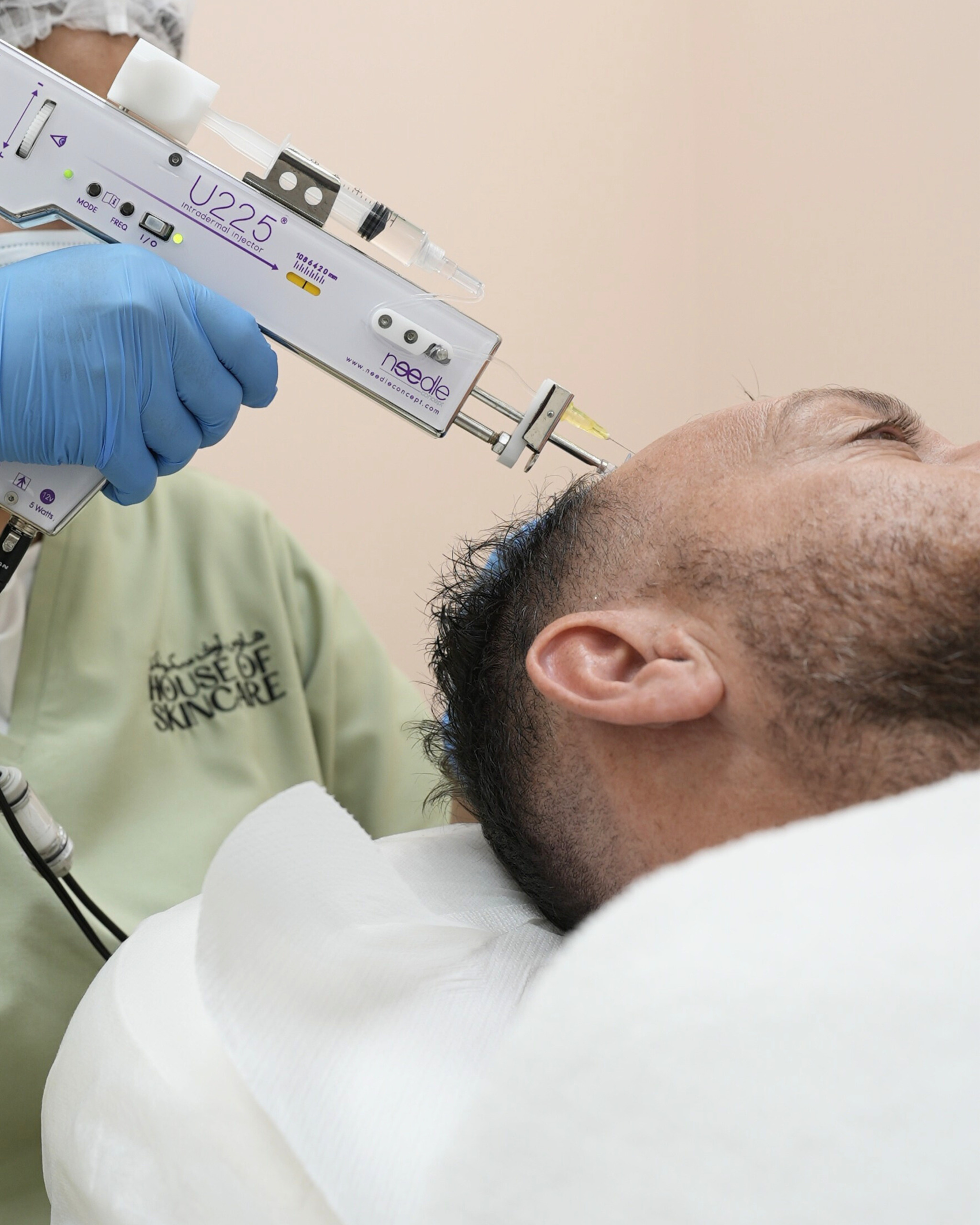
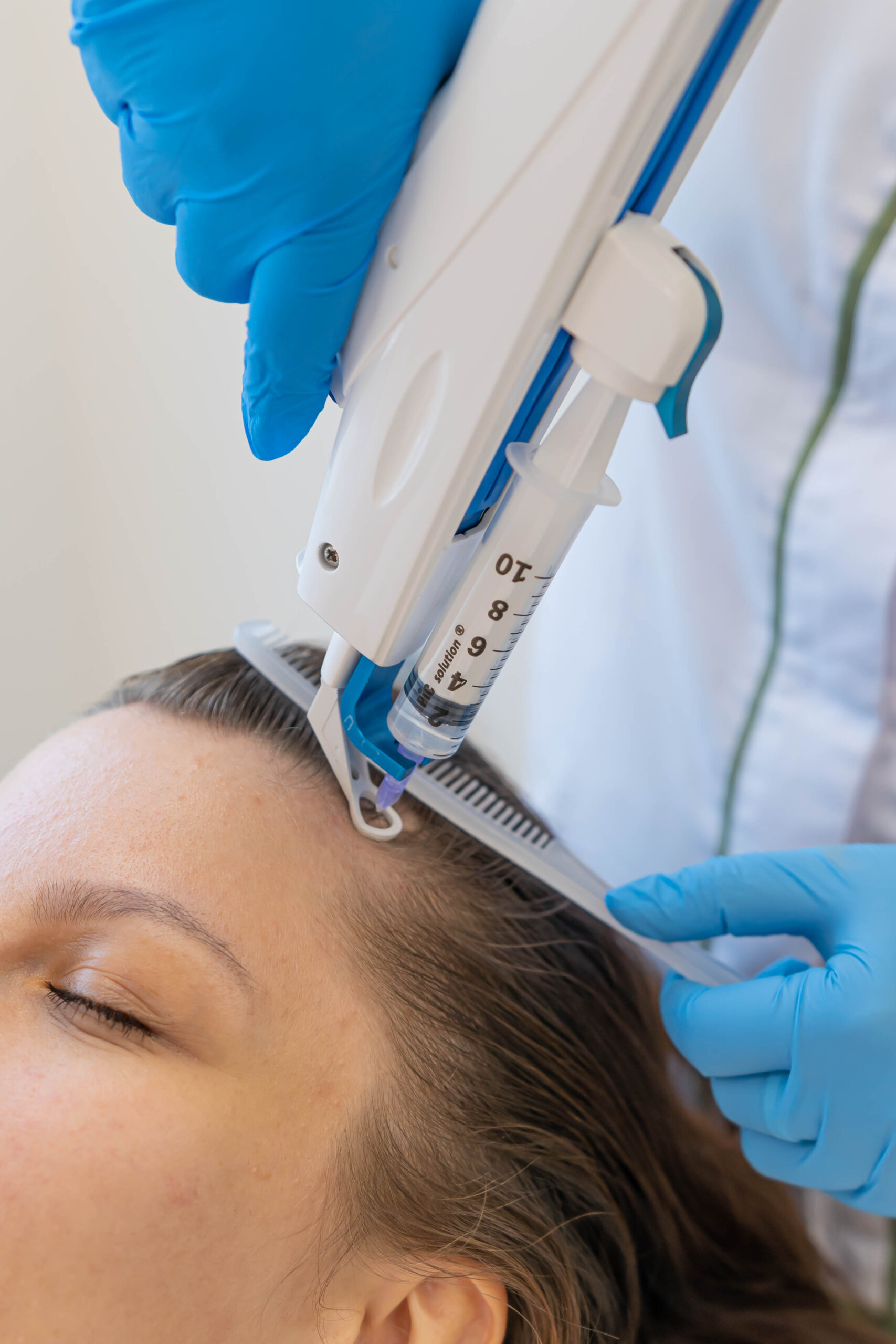
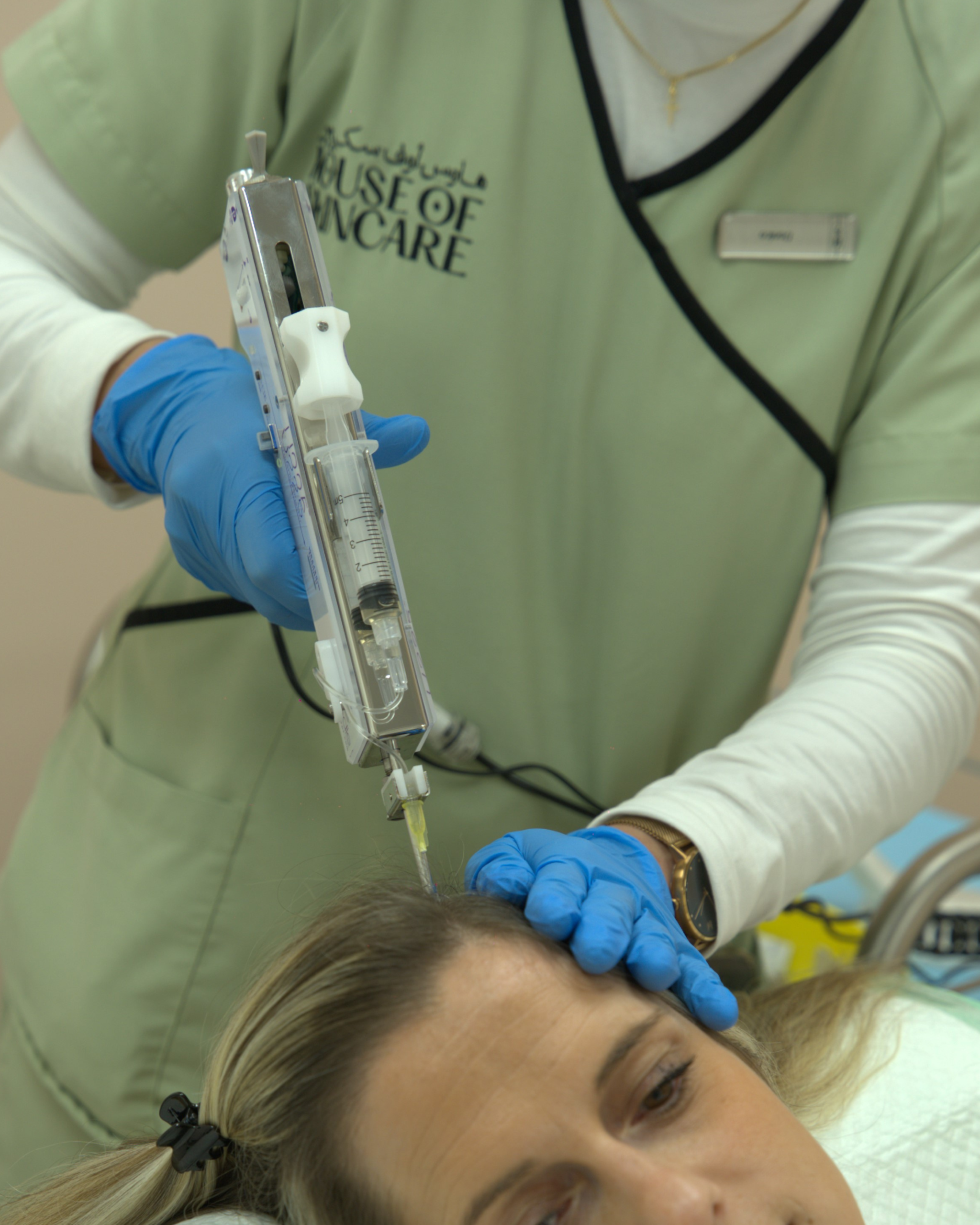
- Mesogun U225 delivery: PRP is delivered using the Mesogun U225 — a motorised injection device that controls depth and spacing with precision not achievable by hand. This ensures every injection reaches the dermal papilla layer accurately, distributes PRP evenly across the entire scalp, and significantly reduces discomfort compared with traditional manual needle injection.
3. Activation (2 minutes)
An activating agent is added to the PRP immediately before injection to initiate growth factor release.
4. Scalp injection (15 to 20 minutes)
PRP is injected at 1 cm intervals across the affected scalp regions at the depth of the dermal papilla. A topical anaesthetic is applied beforehand to keep the procedure comfortable. Most patients describe the sensation as mild pressure rather than pain.
5. Post-treatment (5 minutes)
A cool compress is applied. No bandaging is required. You can leave the clinic immediately.
Total session time: 30 to 45 minutes.
How Many PRP Sessions Do You Need?
| Phase | Sessions | Interval |
|---|---|---|
| Initial course | 3 to 4 sessions | 4 to 6 weeks apart |
| Early maintenance | 1 session | 3 months after final initial session |
| Ongoing maintenance | 1 to 2 sessions per year | Every 4 to 6 months |
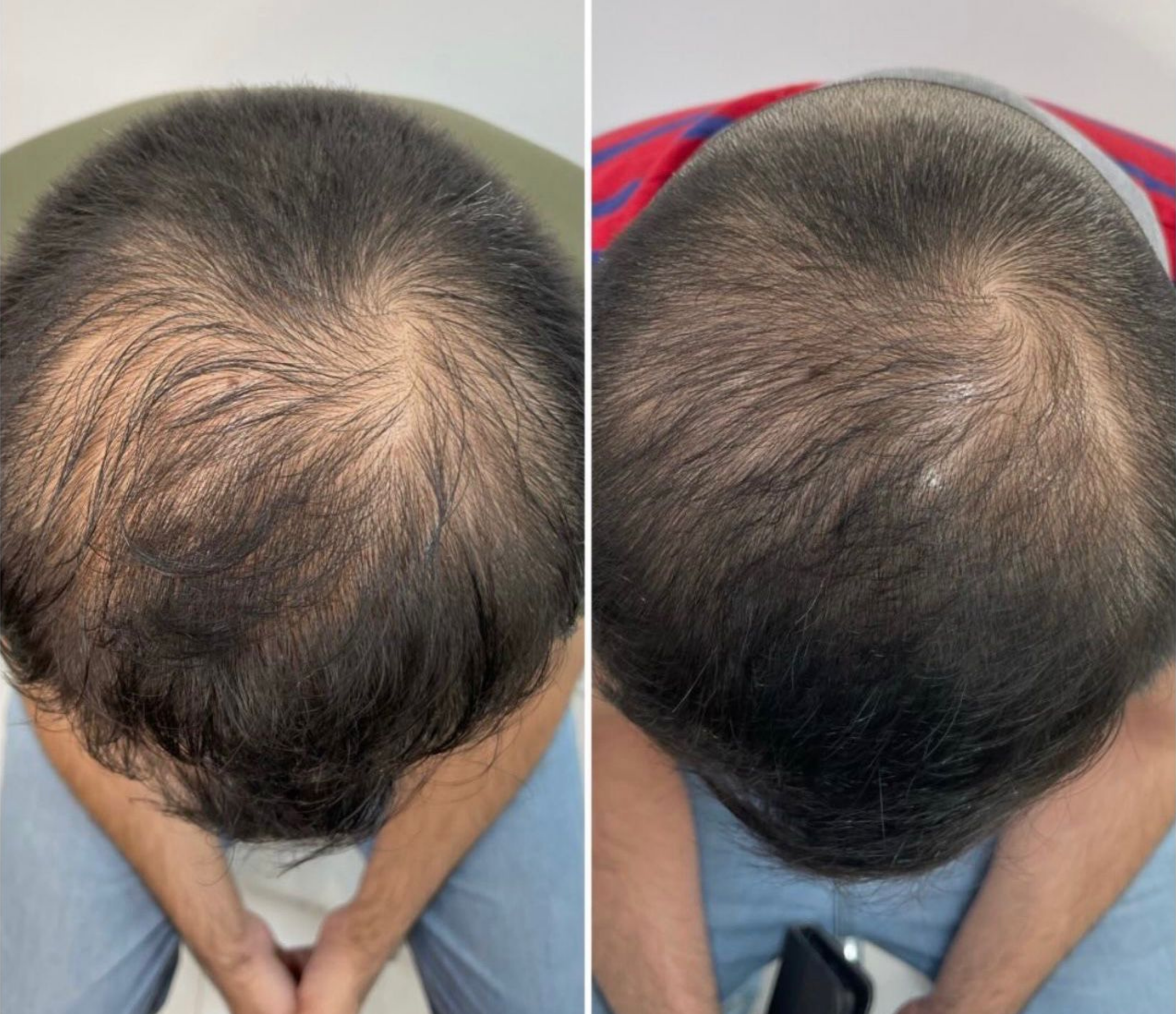
Most patients notice reduced shedding after the second session. Visible improvements in density and hair calibre typically become measurable at the three-month mark and continue developing through the six-month point as new anagen hairs grow in and thicken.
Hair loss is a progressive condition. PRP does not permanently cure androgenetic alopecia — the underlying hormonal and genetic drivers remain. Maintenance sessions are not optional if you want to sustain results. Patients who complete the initial course and then stop entirely tend to return to baseline within 12 to 18 months. Those who maintain regular sessions hold their gains year on year.
PRP vs. Mesogun vs. Exosome Therapy: How to Choose
House of Skincare offers three distinct injectable hair restoration treatments. Understanding how they differ helps set accurate expectations:
PRP uses your own concentrated blood plasma. The active agents are your own growth factors. Because it is autologous, the risk of adverse reaction is close to zero. It is the most extensively studied of the three options in peer-reviewed literature.
Mesogun scalp mesotherapy delivers a cocktail of micronutrients, biotin, amino acids, DHT blockers, and growth factors via a motorised injection device. Rather than relying on your own blood, it introduces a standardised formulation. It suits patients whose own platelet response may be suboptimal or who want a precisely formulated cocktail targeting the DHT pathway directly.
Exosome hair restoration is the newest of the three. Exosomes are extracellular vesicles derived from stem cells, carrying a high-concentration payload of signalling molecules. Early clinical data is promising and the mechanism is distinct from PRP, which is why some patients benefit from a combined PRP plus exosome protocol rather than either treatment alone.
The right choice depends on your specific hair loss pattern, dermoscopy findings, and response to previous treatments. Dr. Al Zaabi maps this out at your first consultation rather than applying a one-size-fits-all protocol.
What the Research Actually Shows
PRP for hair loss is not experimental. The clinical evidence base is substantial:
- A 2020 randomised controlled trial published in the Journal of the American Academy of Dermatology found patients treated with PRP had approximately 71 hairs per square centimetre at 8 weeks and 106 hairs per square centimetre at 24 weeks compared with baseline.
- A separate randomised trial documented hair count rising from 120 to 162 hairs per square centimetre over 12 months — a 35% increase in density.
- A large systematic review found approximately 84% of clinical trials reported a positive effect of PRP on hair regrowth in androgenetic alopecia.
- A 2024 systematic review of 21 studies and over 600 participants found PRP significantly improved hair density and thickness in women, with effectiveness comparable to topical minoxidil and a more favourable side effect profile.
- Studies comparing PRP head-to-head with minoxidil have found PRP outperforms minoxidil for certain patient profiles, with fewer side effects.
Before and After Your Treatment: What to Expect
Before your session
| Preparation | Timing |
|---|---|
| Avoid blood-thinning medications (aspirin, ibuprofen, fish oil supplements) | 5 to 7 days before |
| Avoid alcohol | 24 hours before |
| Wash your hair normally — arrive with a clean, product-free scalp | Day of appointment |
| Stay well hydrated | Day before and day of |
| Disclose all current medications and supplements | At consultation |
After your session
| Aftercare | Duration |
|---|---|
| Avoid washing hair | 12 hours |
| Avoid strenuous exercise, saunas, steam rooms | 24 hours |
| Avoid direct sun on the scalp | 24 hours |
| Avoid hair dye or chemical treatments | 72 hours |
| Avoid alcohol | 24 hours |
| Resume normal hair washing and styling | After 24 hours |
Mild soreness, redness, or a tight sensation at injection sites is normal and resolves within 24 to 48 hours. Significant swelling, prolonged pain, or signs of infection are uncommon — contact the clinic if they occur.
Frequently Asked Questions
Does PRP actually regrow hair or just slow loss?
Both, in most cases. In patients with early to moderate androgenetic alopecia, PRP has been shown to measurably increase hair density and shaft diameter in controlled trials — this represents genuine regrowth of miniaturised hair, not just stabilisation. In patients with more advanced loss, the primary benefit is slowing progression and improving the quality of remaining hair. Dr. Al Zaabi uses dermoscopy to show you the current state of your follicles and explain honestly what is achievable in your specific case.
How long does PRP hair treatment last?
The initial course produces results that typically hold for 12 to 18 months before requiring maintenance. Patients on a regular maintenance schedule of one to two sessions per year sustain their improvements year on year. The underlying hair loss condition does not go away, so PRP is a long-term management strategy rather than a one-time fix.
Is PRP hair treatment painful?
The injections are uncomfortable rather than painful for most patients. A topical anaesthetic is applied to the scalp 20 to 30 minutes before the session, which significantly reduces sensation during injection. Post-treatment, the scalp typically feels tender and slightly tight for 24 to 48 hours — similar to mild soreness after exercise.
Can PRP be combined with minoxidil or finasteride?
Yes, and for androgenetic alopecia the combination often outperforms either treatment alone. PRP addresses the follicle at the growth factor level; minoxidil increases blood flow to the follicle; finasteride reduces the DHT signal driving miniaturisation. Used together under medical supervision, they address the condition through three distinct mechanisms. Dr. Al Zaabi will advise whether a combined approach is appropriate at your consultation.
Is PRP safe for all hair and skin types?
Yes. Because PRP is derived from your own blood, the risk of allergic reaction is close to zero. It is safe across all Fitzpatrick skin types, which is clinically relevant in Abu Dhabi’s diverse patient population. The main contraindications are active scalp infection, blood clotting disorders, and anticoagulant medication — all of which Dr. Al Zaabi screens for at consultation.
Book Your Hair Loss Consultation at House of Skincare
Hair loss responds best to early intervention. The longer miniaturisation continues, the fewer active follicles remain to respond to treatment. If you have noticed increased daily shedding, a widening parting, or reduced density at the temples or crown, a dermoscopy assessment is the most accurate way to understand what is happening at the follicle level and what treatment options are appropriate for your pattern.
Dr. Khadija Al Zaabi consults at House of Skincare on Yas Island, Abu Dhabi. Every hair loss consultation includes a detailed dermoscopy examination and a clear, honest treatment plan.
Call us: 02 657 1000
WhatsApp: 054 548 5000
Book online: houseofskincare.ae/contact-us/